

Queen Victoria’s Royal Charters That Ratified the Treaty of Waitangi.
 Published 09/09/2026 |
 Below is Queen Victoria’s 'Royal Charter/Letters Patent' appointing William Hobson as Lieutenant Governor of New Zealand and extending the boundaries of New South Wales to include all the islands of New Zealand in 1839. Sir George Gipps, Governor of New South Wales was in fact, the first Governor of New Zealand with Captain William Hobson as his Lieutenant. It placed New Zealand under the dependency of New South Wales.
1839 Royal Charter/Letters Patent Placed New Zealand Under the Dependency of New South Wales.
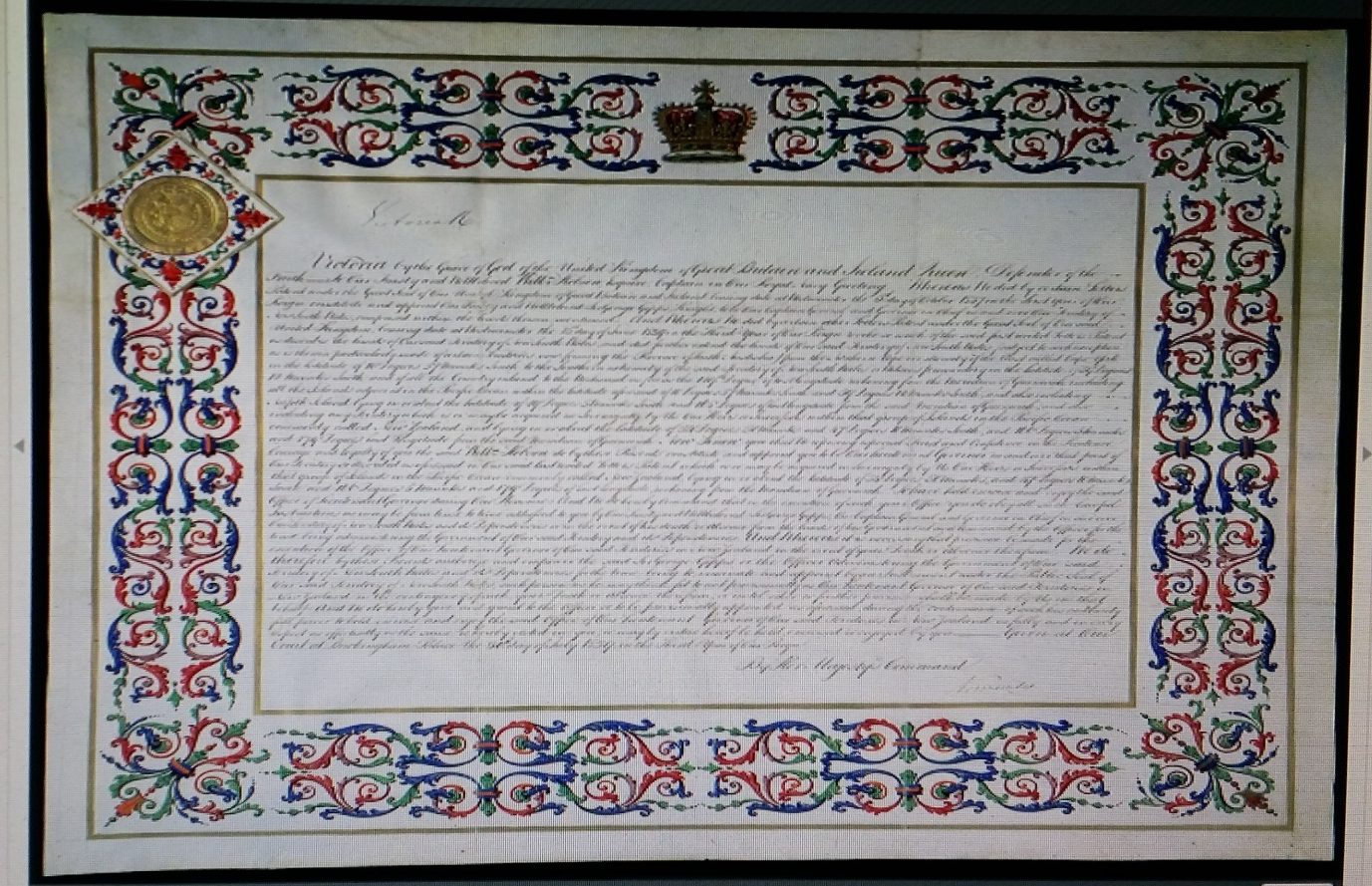
The document reads:
Victoria R
Victoria by the Grace of God of the United Kingdom of Great Britain and Ireland Queen, Defender of the Faith – To Our Trusty and Well-beloved William Hobson Esquire, Captain of the Royal Navy Greeting. Whereas We did by certain Letters Patent under the Great Seal of Our United Kingdom of Great Britain and Ireland bearing date at Westminster the 5th day of October 1837 in the First year of Our Reign constitute and appoint Our Trusty and Well beloved Sir George Gipps, Knight, to be Our Captain General and Governor in Chief in and over Our Territory of New South Wales, comprised within the limits therein mentioned. And Whereas We did by certain other Letters Patent under the Great Seal of Our said United Kingdom, bearing date at Westminster the 15th day of June 1839 in the Third Year of Our Reign revoke so much of the said first recited Letters Patent as describes the limits of Our said Territory of New South Wales, and did further extend the limits of Our said Territory of New South Wales (subject to such exception as is therein particularly made of certain Territories now forming the Province of South Australia) from the Northern Cape or extremity of the Coast called Cape York in the latitude of 10 Degrees 37 Minutes South to the Southern extremity of the said Territory of New South Wales or Wilson’s promontory in the latitude of 39 Degrees 12 Minutes South and of all of the Country inland to the Westward as far as the 129th Degree of East longitude reckoning for the Meridian of Greenwich including all the Islands adjacent in the Pacific Ocean within the latitude aforesaid of 10 Degrees 37 Minutes South and 39 Degrees 12 Minutes South, and also including Norfolk Island lying in or about the latitude of 29 Degrees 3 Minutes South and 168 Degrees of East Longitude from the said Meridian of Greenwich, and also including any Territory which is or maybe acquired in Sovereignty by Us Our Heirs or Successors within that group of Islands in the Pacific Ocean commonly called New Zealand, and lying in or about the latitude of 34 Degrees 30 Minutes North and 47 Degrees 10 Minutes South, and 166 Degrees 5 Minutes and 179 Degrees East longitude from the said Meridian of Greenwich. Now Know you that We reposing especial Trust and Confidence in the Prudence Courage and Loyalty of you the said William Hobson do by these Present constitute and appoint you to be Our Lieutenant Governor in and over that part of Our Territory so described as foresaid in Our said last recited Letters Patent which is or maybe acquired in Sovereignty by Us Our Heirs or Successors within that group of Islands in the Pacific Ocean commonly called New Zealand, lying in or about the latitude of 34 Degrees 30 Minutes North and 47 Degrees 10 Minutes South, and 166 Degrees 5 Minutes and 179 Degrees East longitude reckoning from the Meridian of Greenwich. To have hold exercise and enjoy the said Office of Lieutenant Governor during Our Pleasure: And We do hereby command that in the execution of such your Office you do obey all such lawful Instructions as may be from time to time addressed to you by Our Trusty and Well beloved Sir George Gipps, Our Captain General and Governor in Chief in and over Our Territory of New South Wales and its Dependencies or in the event of his death or absence from the limits of his Government and command by the Officer for the time being administering the Government of Our said Territory and its Dependencies. And Whereas it is necessary that provision be made for the execution of the Office of Our Lieutenant Governor of Our said Territories in New Zealand in the event of your Death or absence therefrom, We do therefore by these Presents authorise and empower the said Sir George Gipps or the Officer Administering the Government of Our said Territory of New South Wales and its Dependencies for the time being to nominate and appoint by an Instrument under the Public Seal of Our said Territory of New South Wales, such person as he may think fit to act provisionally as Our Lieutenant Governor of Our said Territories in New Zealand in the contingency of such your Death or absence therefrom, or until other or further provision shall be made by Us in that behalf. And We do hereby give and grant to the Officer so to be provisionally appointed as aforesaid, during the continuance of such his authority full power to hold exercise and enjoy the said Office of Our Lieutenant Governor of Our said Territories in New Zealand as fully and in every respect as effectually as the same as is hereby vested in you, or may be by virtue hereof be held, exercised or enjoyed by you – Given at Our Court at Buckingham Palace the 30th day of July 1839, in the Third Year of Our Reign. By Her Majesty’s Command, Lord Normandy.
This is the Royal Charter/Letters Patent dated the 30 July 1839 issued by “Victoria by the Grace of God” under “The Great Seal of the United Kingdom of Great Britain and Ireland”, extended the boundaries and laws of New South Wales over all the islands of New Zealand.
Note. This was before the Treaty of Waitangi was drafted or signed on 6 February 1840.
Royal Charter of 1840. Constitution of the Colony of New Zealand into a Separate British Colony on 24 May 1841.
Below is Queen Victoria’s Royal Charter/Letters Patent dated 16 November 1840. The Constitution of the Colony of New Zealand into a separate colony on 24 May 1841. Archives New Zealand Ref. No. ACGO 8341 1A1 9.
This Royal Charter/Letters Patent ratified the Treaty of Waitangi, separated New Zealand from New South Wales Dependency, and made New Zealand into a British Colony with a Governor and Constitution that set up New Zealand’s Political, Legal and Justice Systems under one flag and one law, irrespective of race, colour or creed.
Without this Royal Charter, New Zealand would have remained under the dependency of New South Wales.
1840 Royal Charter/Letters Patent Made New Zealand into a British Colony.
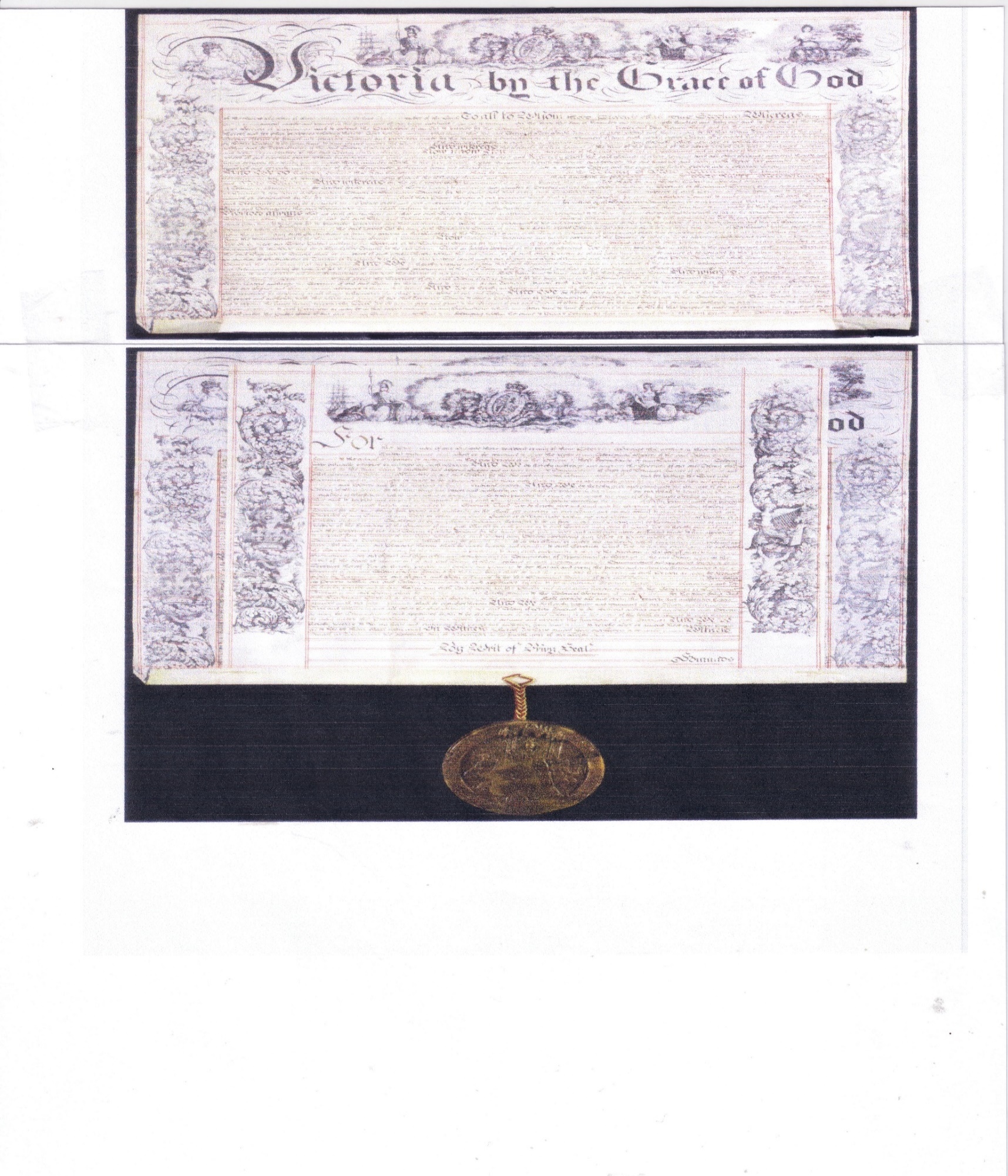
This is New Zealand true Founding Document and First Constitution.
The Constitution Reads:
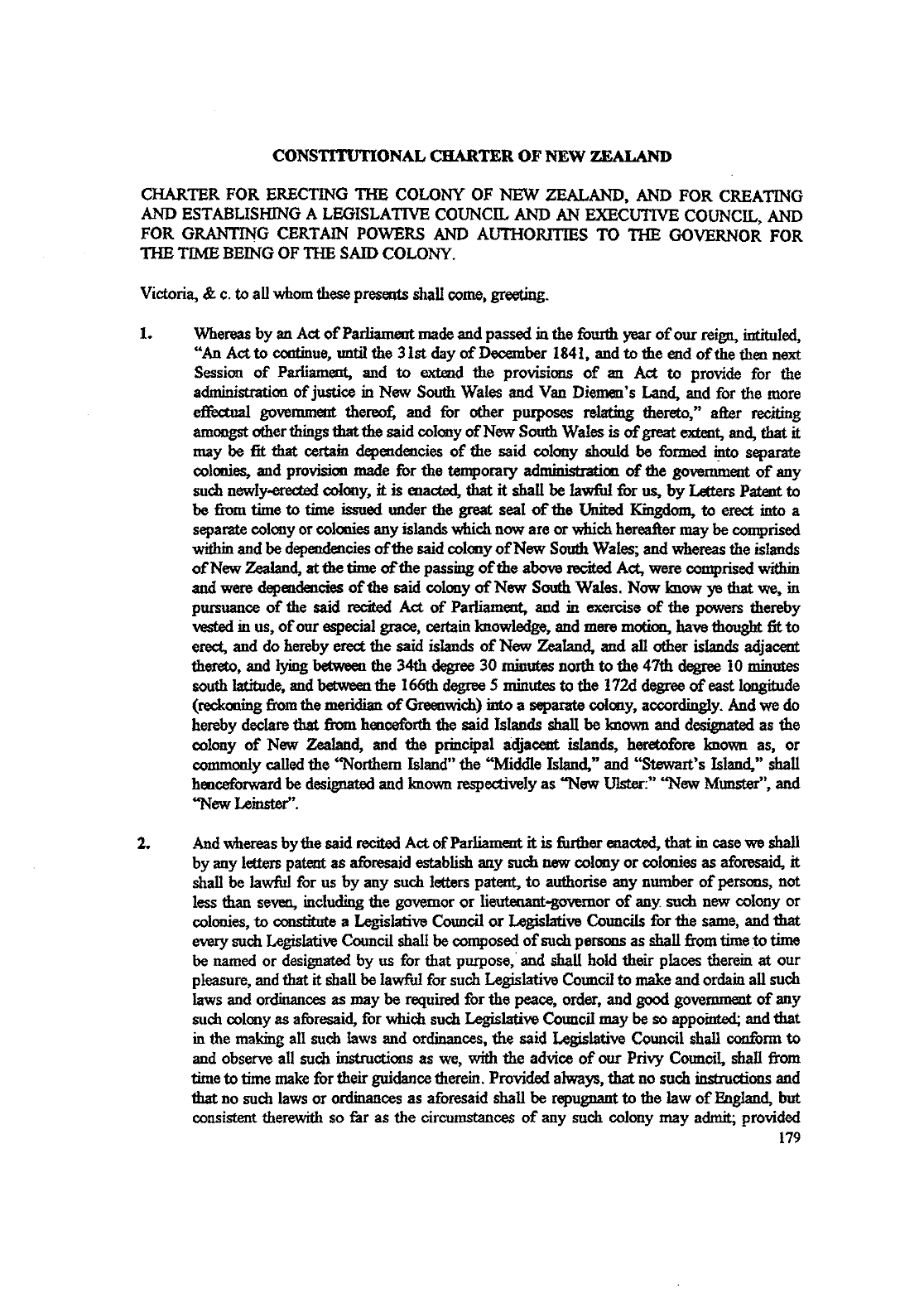
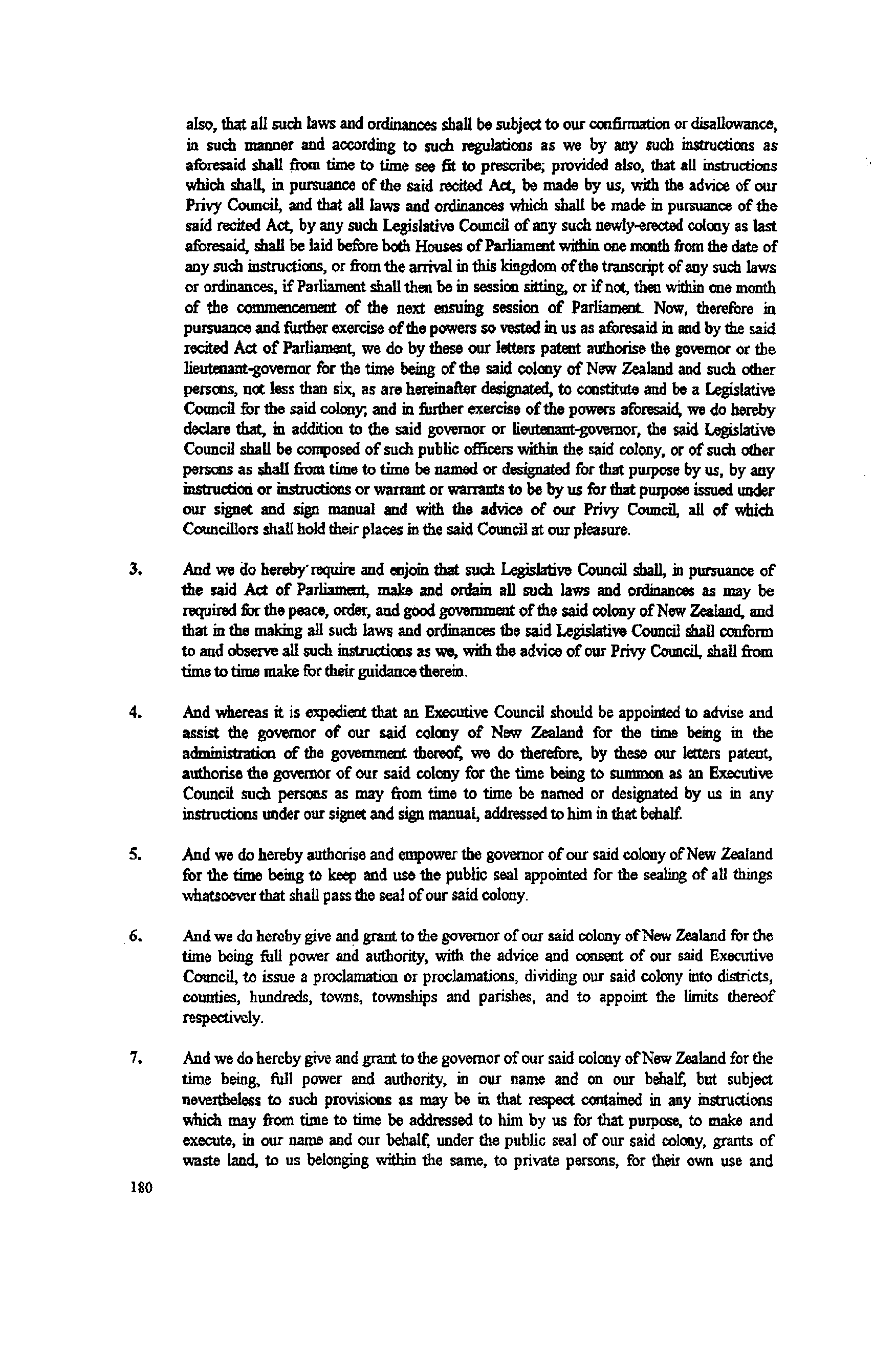
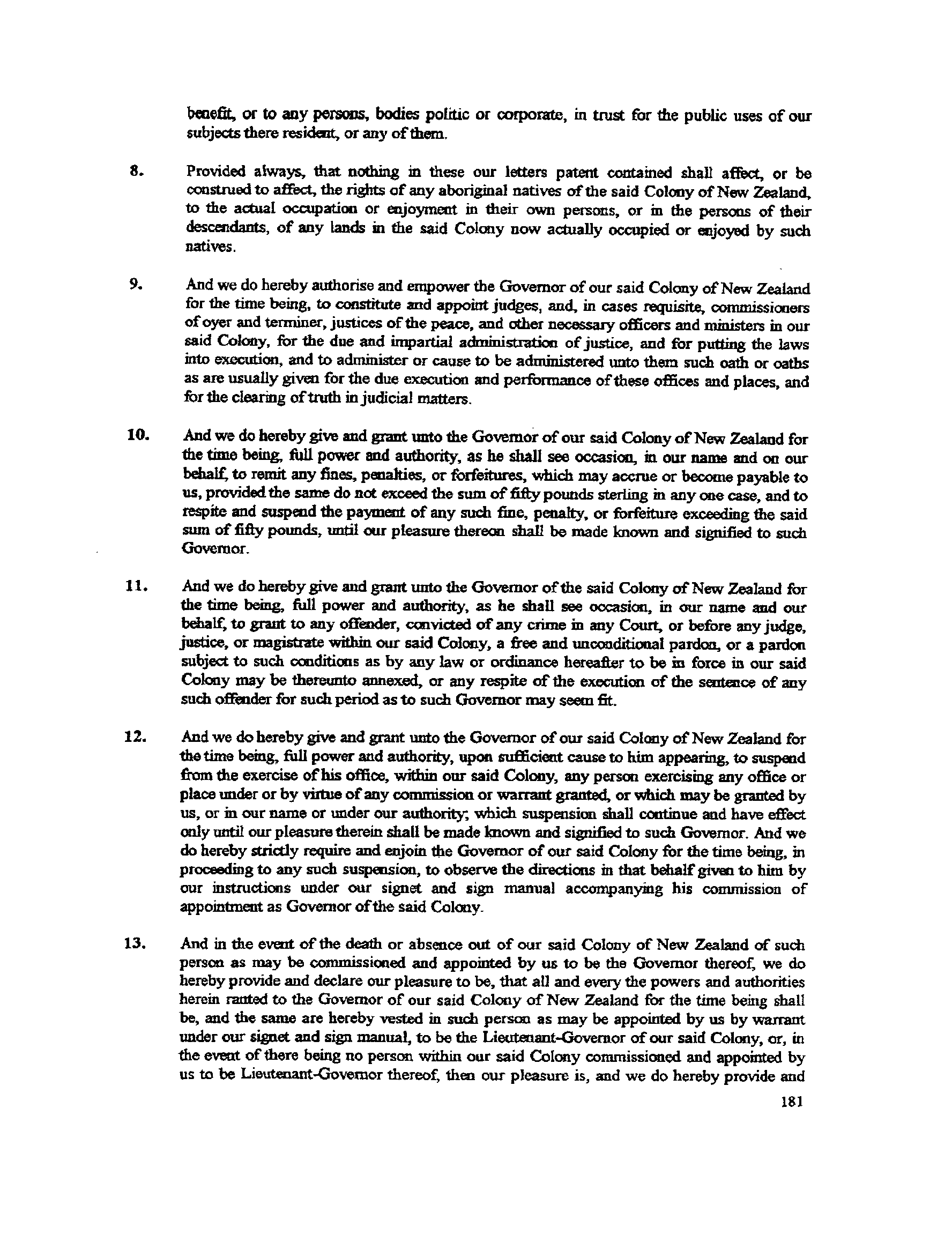
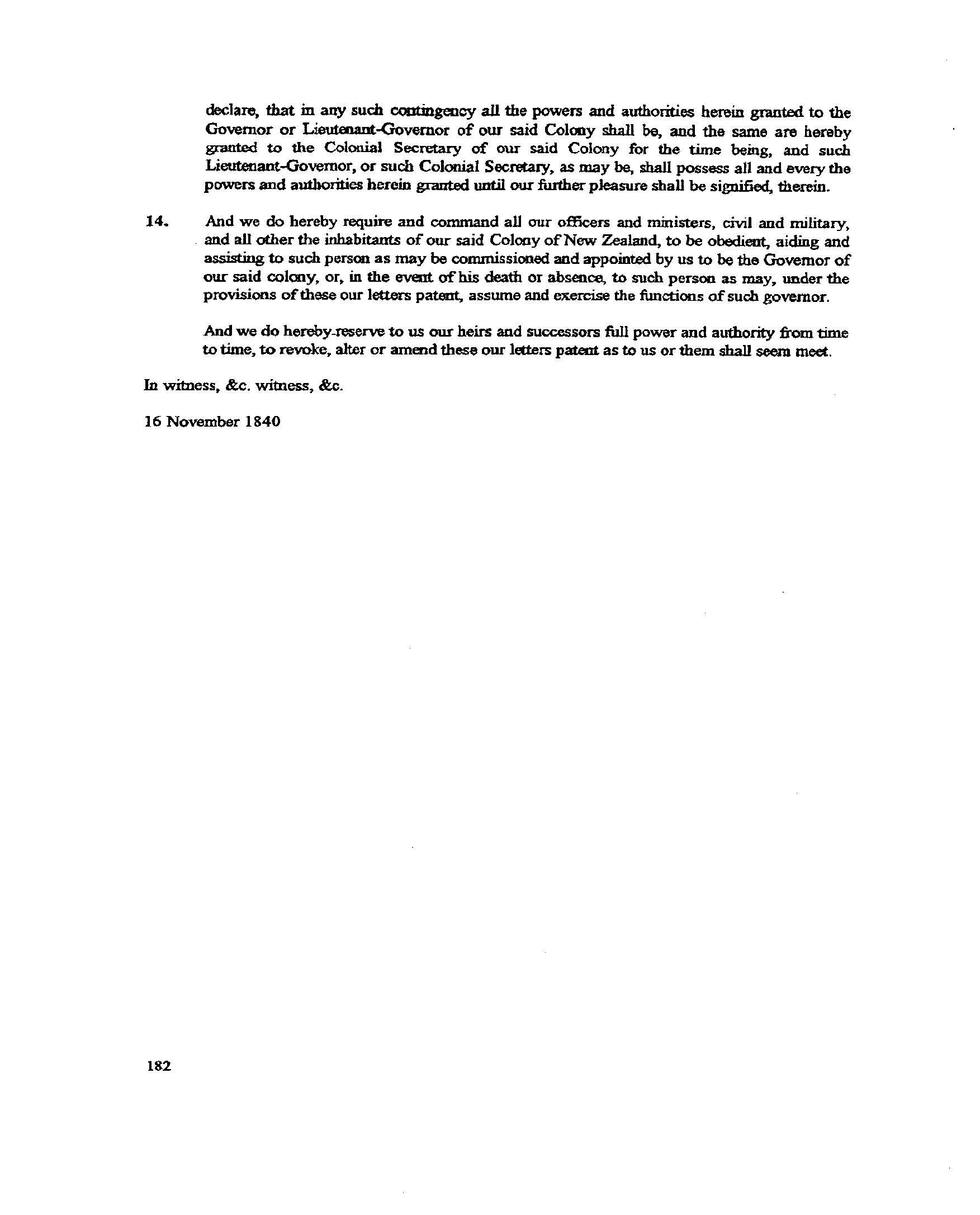
This is the Royal Charter/Letters Patent dated 16 November 1840 issued by “Victoria by the Grace of God” under “The Great Seal of the United Kingdom of Great Britain and Ireland”, that ratified the Treaty of Waitangi, separated New Zealand from New South Wales and made New Zealand into a British Colony with a Governor and Constitution that set up New Zealand’s political, legal and justice systems under one flag and one law irrespective of race, colour or creed.
Note. This Royal Charter ratified the Treaty of Waitangi.
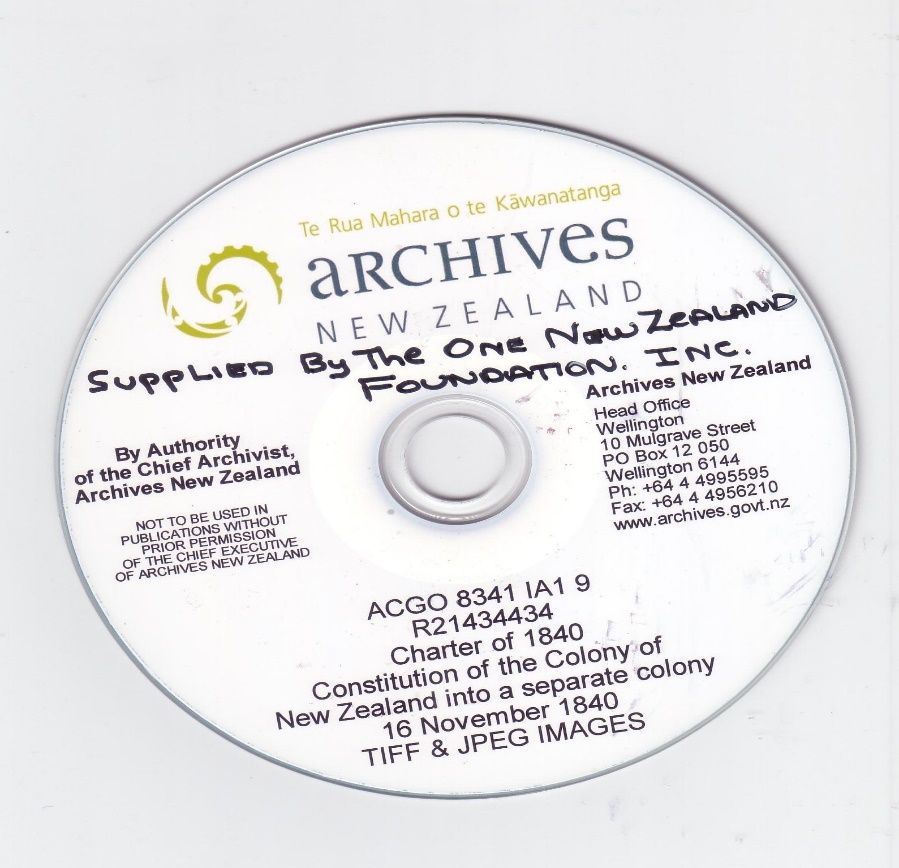
Disc supplied by the Chief Archivist, Archives New Zealand.
Disc of the Charter of 1840. Constitution of the Colony of New Zealand into a separate British Colony 16 November 1840.
FIRST SITTING OF THE LEGISLATIVE COUNCIL OF NEW ZEALAND.
(From the New Zealand Government Gazette)
His Excellency the Governor, according to notice, opened the first session of the legislative council of New Zealand on the 24th May 1841. Hon. W. Shortland, Colonial Secretary, Hon. Francis Fisher, Attorney General, Hon. George Cooper, Colonial Treasurer, E. S. Halswell, Esq., one of the three senior justices, being present, received the oaths and took their seats in the Legislative Council accordingly. James Coates, Esq., was appointed Clerk of the Council, and took the oaths of office. His Excellency then delivered the following speech :— Gentlemen—I have availed myself of this early period to assemble the members of the legislative council for the purpose of bringing under consideration certain measures which the altered circumstances of the Colony seem to me urgently to require. At this our first meeting I deem it proper to draw your attention, not only to the Royal Charter, but to the highly, important instructions under the Royal Signet and Sign Manual which accompany it. The Charter, as you are already aware, erects the islands of New Zealand and certain dependencies into a separate Colony, under the Superintendence of a Governor and Commander-in-Chief. It constitutes a Legislative Council, who are empowered to enact laws and ordinances for the local government of the Colony; it authorises the establishment of Courts of Justice, and the issue of Commissions of the Peace; and, in fact, brings into complete operation British laws throughout the whole Colony of New Zealand. The instructions under the Royal Signet and Sign Manual more particularly define the functions of the Governor and Council, and in a clear and conspicuous manner point out the duties of each. In order that you, gentlemen, may have an opportunity of acquainting yourselves with those particular duties, I have directed the instructions to be laid on the table, and kept open for your perusal in the Council Chamber. I regret that I cannot at the present meeting lay before you the Estimates of the ensuing year, which, although in a forward state of preparation, are in-complete, owing to the non-arrival of directions from the Lords of the Treasury, of which I am advised, and which may be daily expected. I shall lay before you an ordinance for the present re-adoption of all such acts of New South Wales as were in force previous to our separation and are now applicable to this colony. It is not my intention, however, eventually to propose for your adoption the laws of New South Wales, but it will be my endeavour, during the recess, aided by the advice and assistance of the Law Officers of the Crown, to prepare for your consideration such laws as will best provide for the administration of justice, and the contingencies of social life, which may be expected to arise in New Zealand ; therefore the measures now proposed to you must be deemed temporary and contingent, as re-sulting from the present peculiar condition of the Colony. By Command of Her Majesty I will bring under your consideration the repeal of the Land Commission Act, and submit for your adoption an ordinance for the same general purposes, but grant-ing to the Governor of New Zealand the same powers as those heretofore enjoyed by the Governor of New South Wales. I will likewise lay before you Bills for the regulation and collection of the revenue of Her Majesty's Customs, for establishing courts of quarter sessions and requests, and for the prohibition of distillation. These, gentlemen, are the only subjects for the present on which I shall require you to deliberate. We have, gentlemen, a solemn and important duty to perform ; by our means conflicting interests are to be reconciled ; harmony and tranquility established, and measures are to be adopted for improving the condition and elevating the character of the aboriginal inhabitants. In this salutary work I confidently look for your cordial assistance and co-operation, and I trust under Divine Providence we shall be enabled to accomplishi these important objects, and to give effect to Her Majesty's Gracious and benign views for the welfare, prosperity, and civilisation of this Colony. Alter laying on the table the Indemnity Bill, the Governor adjourned the Council until Thursday, the 27th May 1841.
New Zealand. Anno quarto Victoriæ Reginæ. No. 1. An Ordinance to declare that the laws of New South Wales, so far as they can be made applicable, shall extend to, and be in force in, Her Majesty's Colony of New Zealand from and subsequent to the date of Her Majesty's Royal Charter and Letters Patent, erecting into a separate Colony the Islands of New Zealand, and to indemnify the Lieutenant Governor and other officers thereof for certain Acts done and performed between the date of the said Royal Charter and Letters Patent and the day of passing this ordinance. Whereas by an Act of the Governor and Legislative Council of New South Wales, made and passed in the third year of the reign of Her present Majesty, entituled " An Act to declare that the Laws of New South Wales extend to Her Majesty's Dominions in the Islands of New Zealand, and to apply the same, as far as applicable, in the administration of justice therein, and to indemnify certain Officers for Acts already done." After reciting that Her Majesty had been pleased to annex Her Majesty's Dominions of New Zealand to the Government of New South Wales, it is enacted that all Laws and Acts or Ordinances of the Governor and Legislative Council of New South Wales, which then were, or thereafter might be, in force within the said Colony should extend to and be applied in the administration of justice within Her Majesty's Dominions in the said Islands of New Zealand, so far as they could be applied therein. And whereas, under and by virtue of an Act of Parliament made and passed in the fourth year of Her said Majesty's Reign, entituled, " An Act to continue until the thirty-first day of December, one thousand eight hundred and forty-one, and to the end of the then next ensuing Session of Parliament, the Provisions of any Act to provide for the Administration of Justice in New South Wales and Van Diemen's Land, and for the more effectual Government thereof, and for other purposes relative thereto," Her Majesty did, by Her Royal Charter and Letters Patent under the Great Seal of the United Kingdom of Great Britain and Ireland, bearing date at Westminster the sixteenth day of November, one thousand eight hundred and forty, erect into a separate Colony the Islands of New Zealand, theretofore comprised within or dependencies of the Colony of New South Wales, with all other islands lying between certain latitude and longitude therein mentioned. And did further provide that from thenceforth the said islands should be known and designated as the "Colony of New Zealand." And whereas, by Her said Royal Charter and Letters Patent, Her Majesty did constitute a Legislative Council for the said Colony of New Zealand, with full power and authority to make and ordain all such Laws and Ordinances as might be required for the peace, order, and good Government of the said Colony. And whereas it is expedient, until all such Laws and Ordinances can be well considered and ordained, that all such Laws, Acts, and Ordinances of New South Wales as are applicable to the Colony of New Zealand should continue to be acted upon and be applied therein. And, in order to remove any doubt which may exist whether the said Laws, Acts, or Ordinances of the said Governor and Legislative Council of New South Wales are and continue in force within the said Colony of New Zealand from and subsequent to the date and proclamation of such Her Majesty's Royal Charter and Letters Patent.
- Be it therefore enacted and ordained by his Excellency the Governor in and over the Colony of New Zealand, with the advice of the Legislative Council thereof, that so much of all and every of the Laws, Acts, and Ordinances heretofore made by the Governor and Legislative Council of New South Wales, and now in force therein, as have already been, and can hereafter during the continuance of this Ordinance be, applied within the said Colony of New Zealand shall be, and the same are hereby, adopted and declared and directed to be extended to and applied in the Administration of Justice in the said Colony of New Zealand, in the like manner as all other the Laws of England, and as if the same had been repeated and re-enacted in this Ordinance. And whereas doubts may arise as to the validity of Acts done and performed in the said Colony of New Zealand since the date of her said Majesty's Royal Charter and Letters Patent by his Excellency as the Lieutenant Governor of the same, and by Justices of the Peace, Officers of the Customs, Constables, and other officers, under and by virtue of the said in part recited Act of the Governor and Legislative Council of New South Wales ; for the removal whereof.
- Be it therefore further enacted that the said Lieutenant Governor of the Colony of New Zealand, and all Justices of the Peace, Officers of the Customs, Constables, and other officers, and all persons whom- soever therein who may have acted under and by virtue of any commission or appointment of her Majesty, or of the governor of New South Wales, or of the said lieutenant governor of the said colony of New Zealand, or under any orders and directions of the same Llieutenant Governor, or of his Excellency the Governor, since his assuming the Government of the said Colony of New Zealand, previous and up to the passing of this Ordinance, shall be, and they, and each and every one of them, are hereby indemnified against, and freed and discharged from, all damages, penalties, and forfeitures to which they, or any one of them, may have heretofore, or may now otherwise be liable for any act so done or performed.
- And be it further enacted that no act done or performed by any such officer or other person aforesaid, shall be questioned or avoided in any Court of Law, by reason of any supposed want of power and authority, and that all such acts so done and performed shall be, and they are declared to be, as valid and effectual in Law, to all intents and purposes, as if each of such officers and persons aforesaid had done and performed such acts within and under, or by virtue of, any Law or Statute of the Parliament of Great Britain and Ireland.
And be it further enacted and ordained that in all or any of the said Acts of the Governor and Legislative Council of New South Wales, which shall under and by virtue of this ordinance be brought into operation, and extended to and applied to the said Colony of New Zealand, whenever the words " Governor, with the advice of the Executive Council, Governor, Justice, or Justices of the Peace, or Government Gazette, of New South Wales," are used in such Act or Acts, the same words shall be construed to mean, and shall include and extend to " the Governor, with the advice of the Executive Council of New Zealand," or "Governor for the time being," or " all or any Justices or Justice of the Peace, and to the Government Gazette of the said Colony of New Zealand;" and that all words or expressions referring, and having relation, to New South Wales shall be, and the same are hereby directed to be, applied and construed to extend to the said Colony of New Zealand. WILLIAM HOBSON, Governor. Passed the legislative council this 3rd day of June, in the year of our Lord one thousand eight hundred and forty-one.
JAMES COATES, Clerk of Councils
All the above information can be found in the New Zealand, Australian and American Archives as well as the British Parliamentary Papers, but the Government has completely ignored New Zealand’s true Founding Documents that ratified the Treaty of Waitangi by making New Zealand into a British Colony under one flag and one law, irrespective of race, colour, or creed.
Prepared by Ross Baker, Researcher, One New Zealand Foundation Inc. 20/6/2019 (C).
Website: www.onenzfoundation.co.nz. Email: ONZF@bigpond.com.au
The Treaty is NOT our Founding Document
Published 22/10/2019 | There is nothing in the Treaty of Waitangi that could be taken as a “Founding Document”.
The Treaty of Waitangi had absolutely nothing to do with setting up our political, legal or justice systems or that Maori must be consulted, it only asked tangata Maori to give up their individual kawanatanga/government and in return, Queen Victoria would give them the “same rights as the people of England”. No more – No less. Tangata Maori became British subjects and a British subject cannot be in, “Partnership with the Crown”. Fact!
The One New Zealand Foundation Inc is concerned that the Government makes no mention of Queen Victoria’s Royal Charters/Letter Patent of 1839 and 1840, New Zealand’s true Founding Documents and first Constitution. Both these Royal Charters were issued by “Victoria by the Grace of God” under, “The Great Seal of the United Kingdom of Great Britain and Ireland”. The Treaty of Waitangi was not!
Queen Victoria or the British Government had no idea of what the Treaty said until it had been signed at Waitangi on the 6 February 1840. Even then, Britain received an unauthorised English version compiled by Lt. Governor Hobson’s Secretary, James Freeman from James Busby’s rejected notes and was not a translation of the Tiriti o Waitangi that over 500 tangata Maori chiefs signed in 1840. The 500 chiefs who signed the Treaty of Waitangi in 1840 were tangata Maori, NOT the tangata whenua or the Indigenous people of New Zealand. Fact.
In fact, in 1877 Chief Justice, Sir James Prendergast ruled the Treaty of Waitangi, “A simple nullity because no political body existed capable of making cession of sovereignty”. This ruling has never been over-ruled and remains in force today but is completely ignored by governments and the Waitangi Tribunal. Fact!
Royal Charter/Letters Patent of 1839.
The Royal Charter/Letters Patent dated the 30 July 1839 placed New Zealand under the laws and dependency of New South Wales. Britain had already gained sovereignty under the Law of Nations.
Royal Charter/Letters Patent of 1840.
The Royal Charter/Letters Patent dated the 16 November 1840 separated New Zealand from New South Wales on the 3 May 1841 and made New Zealand into a British Colony with a Governor and Constitution that set up New Zealand’s political, legal and justice systems under one flag and one law, irrespective of race, colour or creed. Fact!
Both these Royal Charters/Letters Patent have been completely ignored by Governments. In fact, on the 17 April 2017 the Government allowed Archives New Zealand to dismantle the Constitution Room and place the Royal Charters of 1839 and 1840 in Archives Repository amongst the other 6 million documents and out of the public’s view. To research these documents now, researchers must order them, that is, if they know they exist. Do you?
The Treaty of Waitangi was placed in the new $7.2 million He Tohu exhibition at the refurbished National Library, Wellington as, “As an iconic constitutional document that shaped Aotearoa New Zealand”. There is no evidence in the Treaty of Waitangi that it was a Founding or Constitutional Document. This is just another lie by government to elevate the Treaty of Waitangi to something it was never intended to be by those who signed it in 1840. Fact!
Prepared for the One New Zealand Foundation Inc.
By Ross Baker, Researcher, One New Zealand Foundation Inc.
Customary Rights to Indigenous People But Maori are not Indigenous to New Zealand
Published 18/08/2015 | The Ministry of Justice book entitled, “Recognising Customary Rights” is based on Maori being the Indigenous people or tangata whenua of New Zealand but there is no explanation or definition of these people in the Glossary.
The Glossary on page 24 states, “Customary marine title (CMT). Comes from a common law concept that recognises property rights of indigenous people that have continued since or before the acquisition of Crown sovereignty to the present day. It is inalienable – the land cannot be sold – and cannot be converted to freehold titled Recognises the relationship that exists, and will continue to exist, between iwi, hapu and whanu and common marine and coastal areas”.
After many years of research by the One New Zealand Foundation Inc and many others, we can find no information to support Maori are the indigenous people or tangata whenua of New Zealand. In fact all the information and evidence we have on file confirms Maori were not the indigenous people of New Zealand.
The evidence we have on file that Maori are not the indigenous people of New Zealand or tangata whenua.
- When Rev Henry Williams and his son Edward translated Lt. Governor Hobson’s final English draft of the Treaty into the Maori language, they use the term, “tangata Maori” to define the people that sign the Tiriti o Waitangi. Both Rev Henry Williams and his son must have known after living in New Zealand for 23 years, that Maori were not the indigenous or tangata whenua. All500 plus chiefs that signed the Tiriti o Waitangi as tangata Maori as they knew they were not tangata whenua! This is only a modern concept by part-Maori to claim Customary Rights!
- In the,”1986 New Zealand Year Book” on page 18, Professor Ranginui Walker, past head of Maori Studies at Auckland University had this to say about the canoe people that arrived in the 14 century, “The traditions are quite clear on one point, whenever crew disembarked there were already tangata whenua (prior inhabitants). The canoe ancestors of the 14-century merged with these tangata whenua tribes. From this time on the traditions abound with accounts of tribal wars over land and its resources. Warfare was the means by which tribal boundaries were defined and political relations between tribes established. Out of this period emerged 42 tribal groups whose territories became fixed after the signing of the Treaty of Waitangi and the establishment of Pax Britannica”. (Pax Britanica – British Peace). While Professor Walker make a clear distinction between the canoe people of the 14 century and the tanagat whenua, he makes no mention of who the tangata whenua were for the simple reason, we are not allowed to know!
- After the Minister of Maori Affairs, the Hon Pita Sharples had signed the Declaration on the Rights of Indigenous People on behalf of the people of New Zealand, the One New Zealand Foundation Inc. wrote under the Official Information Act to the following Ministers asking them for the official document defining, “Who are the indigenous people of New Zealand.
- I have attached the replies from the Prime Minister, Hon John Key; the Attorney General, Hon Christopher Finlayson; the Minister of Maori Affairs, Hon Pita Sharples; the Minister of Foreign Affairs, the Hon Murray McCully and a letter from the Attorney General in response to our OIA request to the Minister of Justice, Hon Simon Power.
- When the Hon Pita Sharples signed the Declaration on the Rights of Indigenous People in New York, he stated to the United Nations, “Maori hold a distinct and special status as the indigenous people, or tangata whenua, of New Zealand”, but when asked, he could not supply a definition of who these people where.
- We are extremely concerned that the Ministry of Justice has taken for granted that Maori are the Indigenous People of New Zealand or the tangata whenua when all the evidence we have on file, including the Tiriti o Waitangi and the attached Minister’s letters say the Government does not have a definition of the Indigenous People of New Zealand or tangata whenua.
If Maori were the Indigenous People of New Zealand, which there is no evidence to prove they were, how can they honestly claim to be today when they have continued to intermarry with other race of their own free will until most now only have a minute trace of Maori ancestry and no longer live by their Maori culture?
Before the Customary Rights debate proceeds, the people of New Zealand must have an “official” definition of the Indigenous People of New Zealand, supported up with forensic evidence.
Compiled by Ross Baker, One New Zealand Foundation Inc. www.onenzfoundation.co.nz (12/8/2015)


