

Queen Victoria’s Royal Charters That Ratified the Treaty of Waitangi.
 Published 09/09/2026 |
 Below is Queen Victoria’s 'Royal Charter/Letters Patent' appointing William Hobson as Lieutenant Governor of New Zealand and extending the boundaries of New South Wales to include all the islands of New Zealand in 1839. Sir George Gipps, Governor of New South Wales was in fact, the first Governor of New Zealand with Captain William Hobson as his Lieutenant. It placed New Zealand under the dependency of New South Wales.
1839 Royal Charter/Letters Patent Placed New Zealand Under the Dependency of New South Wales.
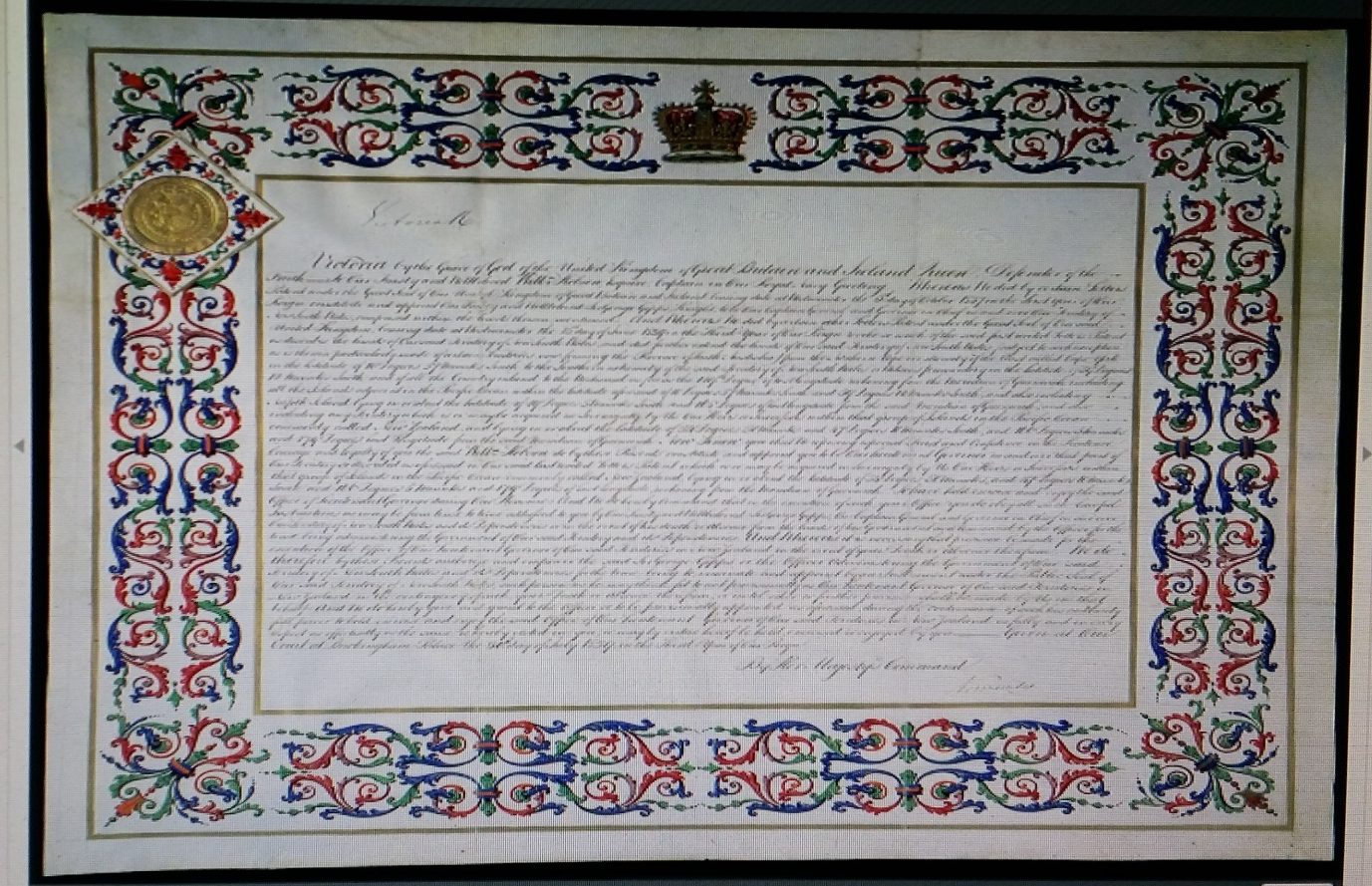
The document reads:
Victoria R
Victoria by the Grace of God of the United Kingdom of Great Britain and Ireland Queen, Defender of the Faith – To Our Trusty and Well-beloved William Hobson Esquire, Captain of the Royal Navy Greeting. Whereas We did by certain Letters Patent under the Great Seal of Our United Kingdom of Great Britain and Ireland bearing date at Westminster the 5th day of October 1837 in the First year of Our Reign constitute and appoint Our Trusty and Well beloved Sir George Gipps, Knight, to be Our Captain General and Governor in Chief in and over Our Territory of New South Wales, comprised within the limits therein mentioned. And Whereas We did by certain other Letters Patent under the Great Seal of Our said United Kingdom, bearing date at Westminster the 15th day of June 1839 in the Third Year of Our Reign revoke so much of the said first recited Letters Patent as describes the limits of Our said Territory of New South Wales, and did further extend the limits of Our said Territory of New South Wales (subject to such exception as is therein particularly made of certain Territories now forming the Province of South Australia) from the Northern Cape or extremity of the Coast called Cape York in the latitude of 10 Degrees 37 Minutes South to the Southern extremity of the said Territory of New South Wales or Wilson’s promontory in the latitude of 39 Degrees 12 Minutes South and of all of the Country inland to the Westward as far as the 129th Degree of East longitude reckoning for the Meridian of Greenwich including all the Islands adjacent in the Pacific Ocean within the latitude aforesaid of 10 Degrees 37 Minutes South and 39 Degrees 12 Minutes South, and also including Norfolk Island lying in or about the latitude of 29 Degrees 3 Minutes South and 168 Degrees of East Longitude from the said Meridian of Greenwich, and also including any Territory which is or maybe acquired in Sovereignty by Us Our Heirs or Successors within that group of Islands in the Pacific Ocean commonly called New Zealand, and lying in or about the latitude of 34 Degrees 30 Minutes North and 47 Degrees 10 Minutes South, and 166 Degrees 5 Minutes and 179 Degrees East longitude from the said Meridian of Greenwich. Now Know you that We reposing especial Trust and Confidence in the Prudence Courage and Loyalty of you the said William Hobson do by these Present constitute and appoint you to be Our Lieutenant Governor in and over that part of Our Territory so described as foresaid in Our said last recited Letters Patent which is or maybe acquired in Sovereignty by Us Our Heirs or Successors within that group of Islands in the Pacific Ocean commonly called New Zealand, lying in or about the latitude of 34 Degrees 30 Minutes North and 47 Degrees 10 Minutes South, and 166 Degrees 5 Minutes and 179 Degrees East longitude reckoning from the Meridian of Greenwich. To have hold exercise and enjoy the said Office of Lieutenant Governor during Our Pleasure: And We do hereby command that in the execution of such your Office you do obey all such lawful Instructions as may be from time to time addressed to you by Our Trusty and Well beloved Sir George Gipps, Our Captain General and Governor in Chief in and over Our Territory of New South Wales and its Dependencies or in the event of his death or absence from the limits of his Government and command by the Officer for the time being administering the Government of Our said Territory and its Dependencies. And Whereas it is necessary that provision be made for the execution of the Office of Our Lieutenant Governor of Our said Territories in New Zealand in the event of your Death or absence therefrom, We do therefore by these Presents authorise and empower the said Sir George Gipps or the Officer Administering the Government of Our said Territory of New South Wales and its Dependencies for the time being to nominate and appoint by an Instrument under the Public Seal of Our said Territory of New South Wales, such person as he may think fit to act provisionally as Our Lieutenant Governor of Our said Territories in New Zealand in the contingency of such your Death or absence therefrom, or until other or further provision shall be made by Us in that behalf. And We do hereby give and grant to the Officer so to be provisionally appointed as aforesaid, during the continuance of such his authority full power to hold exercise and enjoy the said Office of Our Lieutenant Governor of Our said Territories in New Zealand as fully and in every respect as effectually as the same as is hereby vested in you, or may be by virtue hereof be held, exercised or enjoyed by you – Given at Our Court at Buckingham Palace the 30th day of July 1839, in the Third Year of Our Reign. By Her Majesty’s Command, Lord Normandy.
This is the Royal Charter/Letters Patent dated the 30 July 1839 issued by “Victoria by the Grace of God” under “The Great Seal of the United Kingdom of Great Britain and Ireland”, extended the boundaries and laws of New South Wales over all the islands of New Zealand.
Note. This was before the Treaty of Waitangi was drafted or signed on 6 February 1840.
Royal Charter of 1840. Constitution of the Colony of New Zealand into a Separate British Colony on 24 May 1841.
Below is Queen Victoria’s Royal Charter/Letters Patent dated 16 November 1840. The Constitution of the Colony of New Zealand into a separate colony on 24 May 1841. Archives New Zealand Ref. No. ACGO 8341 1A1 9.
This Royal Charter/Letters Patent ratified the Treaty of Waitangi, separated New Zealand from New South Wales Dependency, and made New Zealand into a British Colony with a Governor and Constitution that set up New Zealand’s Political, Legal and Justice Systems under one flag and one law, irrespective of race, colour or creed.
Without this Royal Charter, New Zealand would have remained under the dependency of New South Wales.
1840 Royal Charter/Letters Patent Made New Zealand into a British Colony.
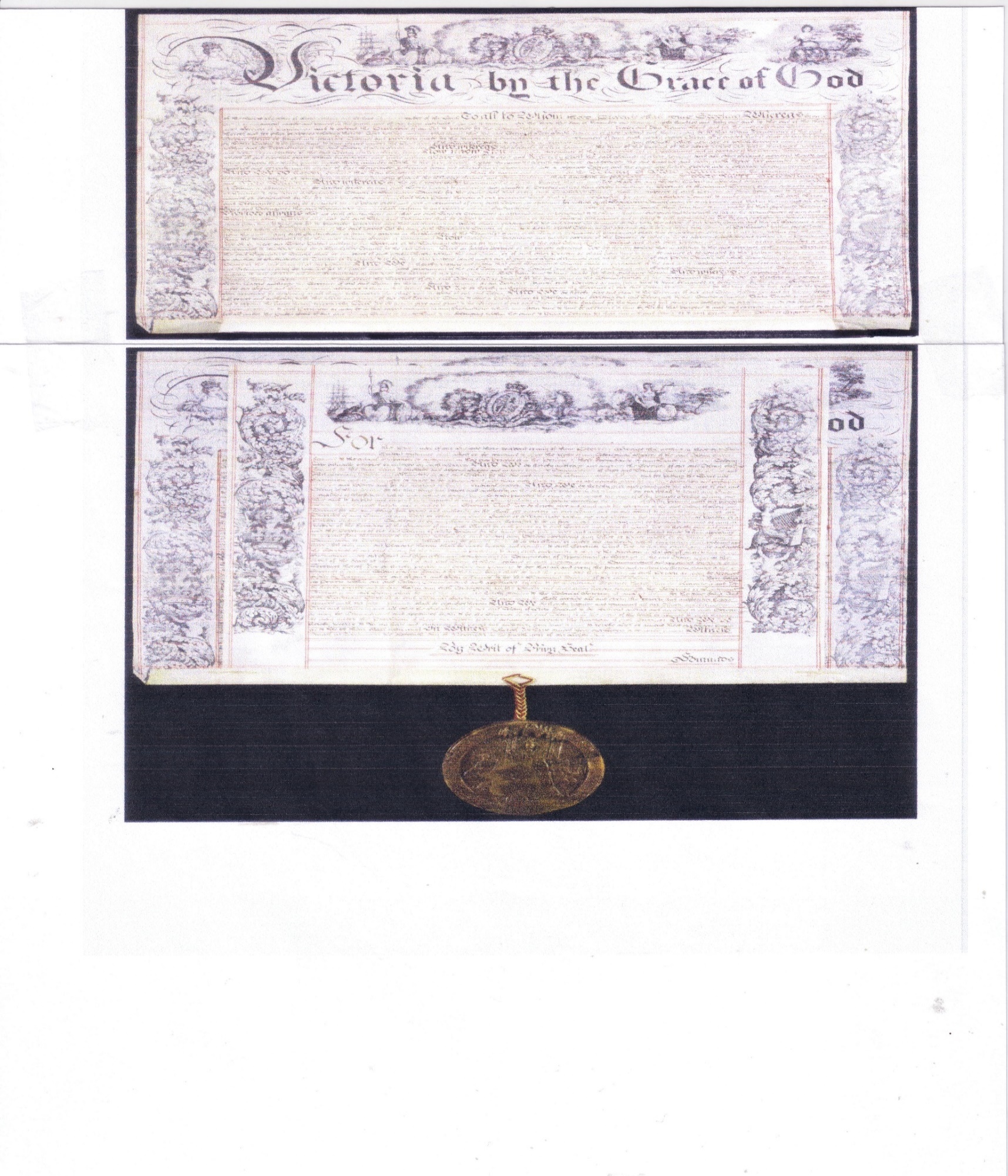
This is New Zealand true Founding Document and First Constitution.
The Constitution Reads:
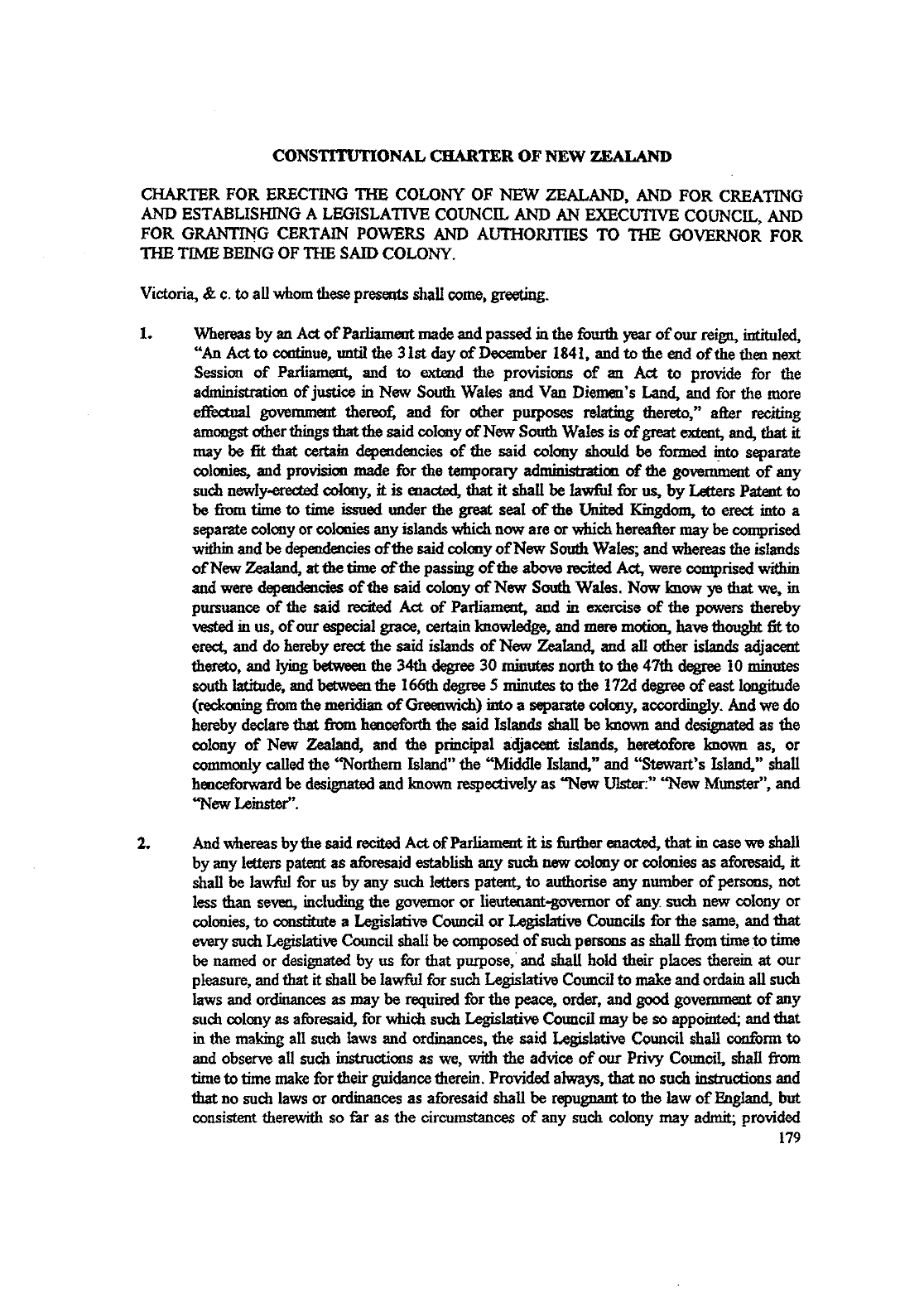
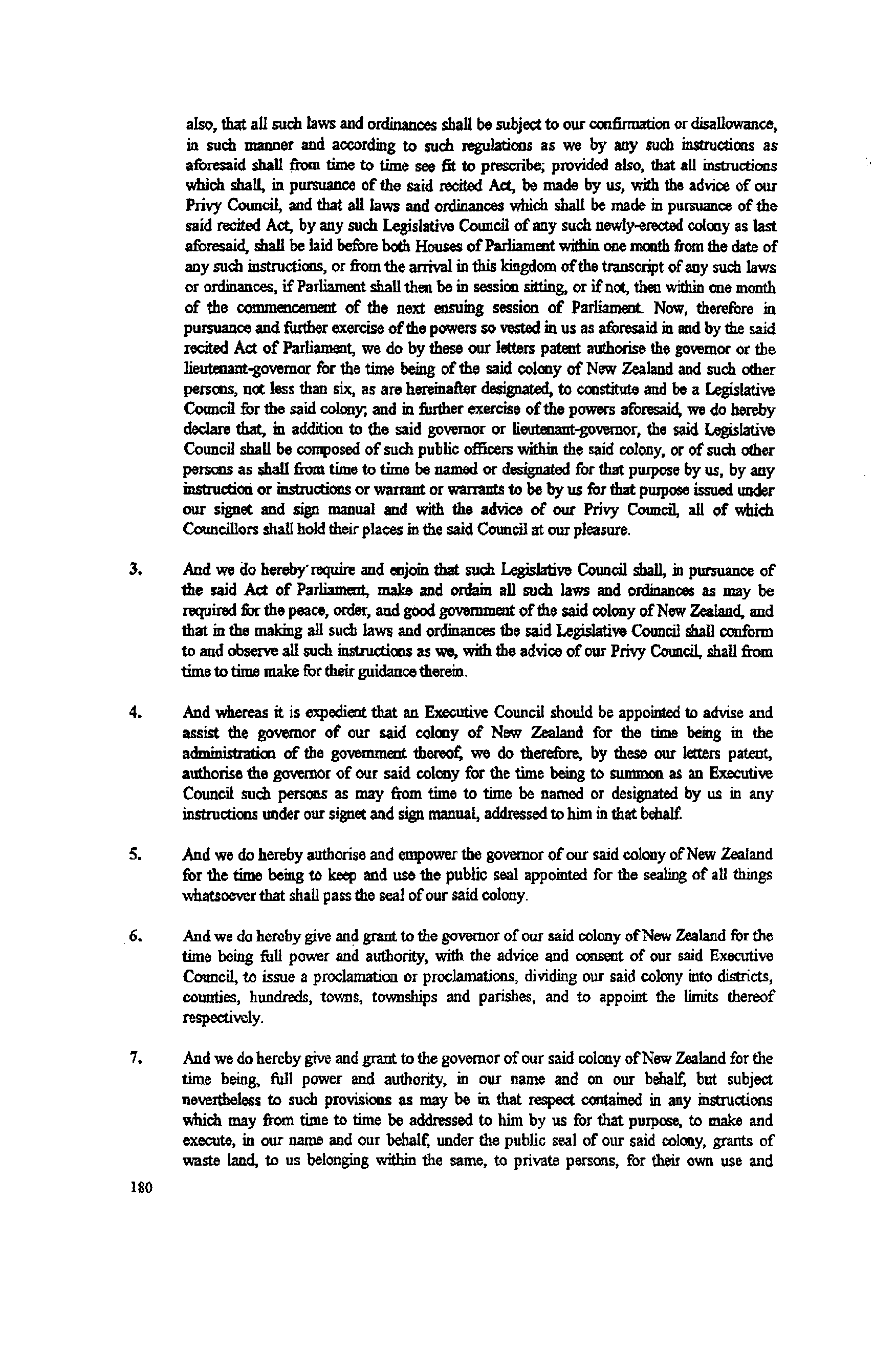
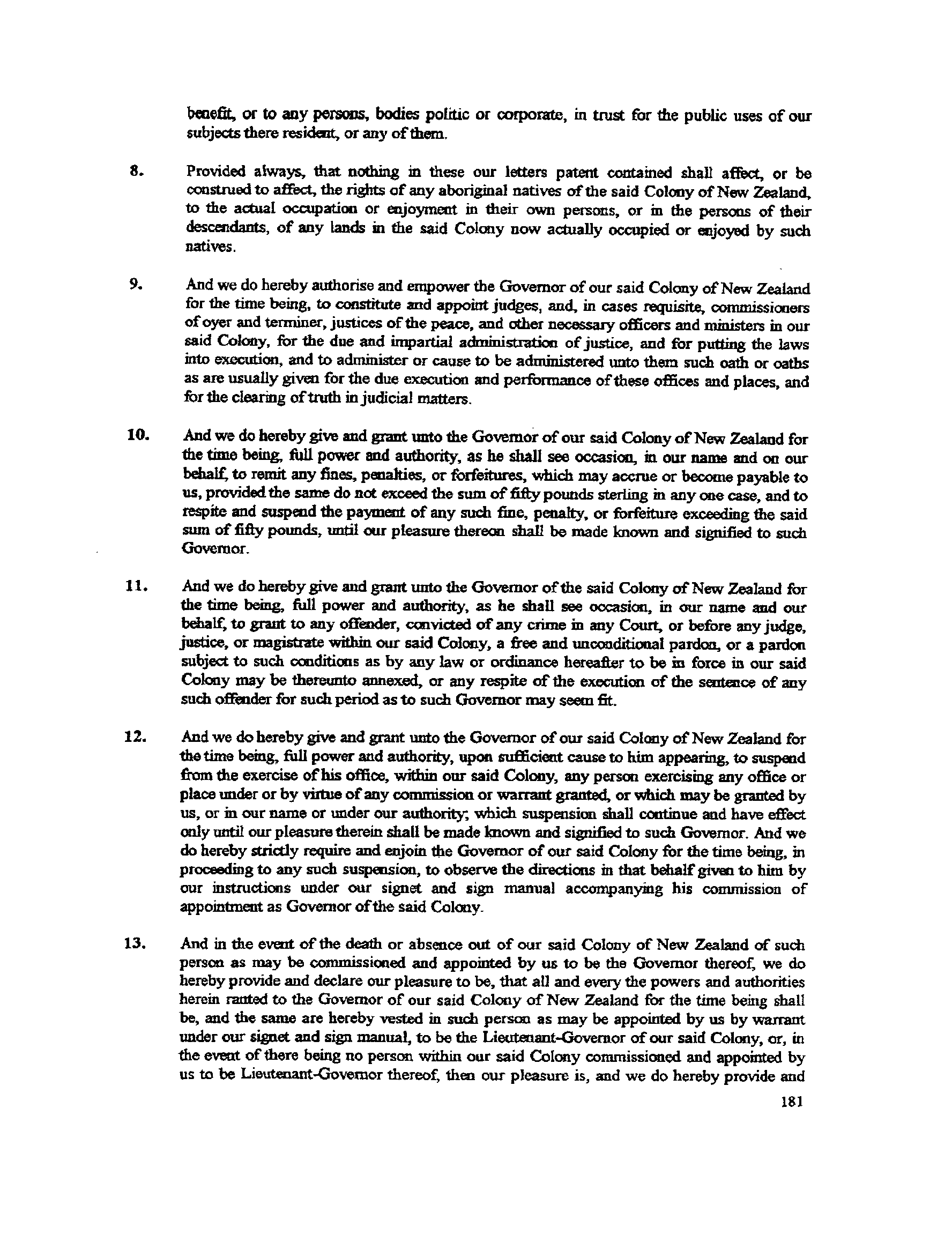
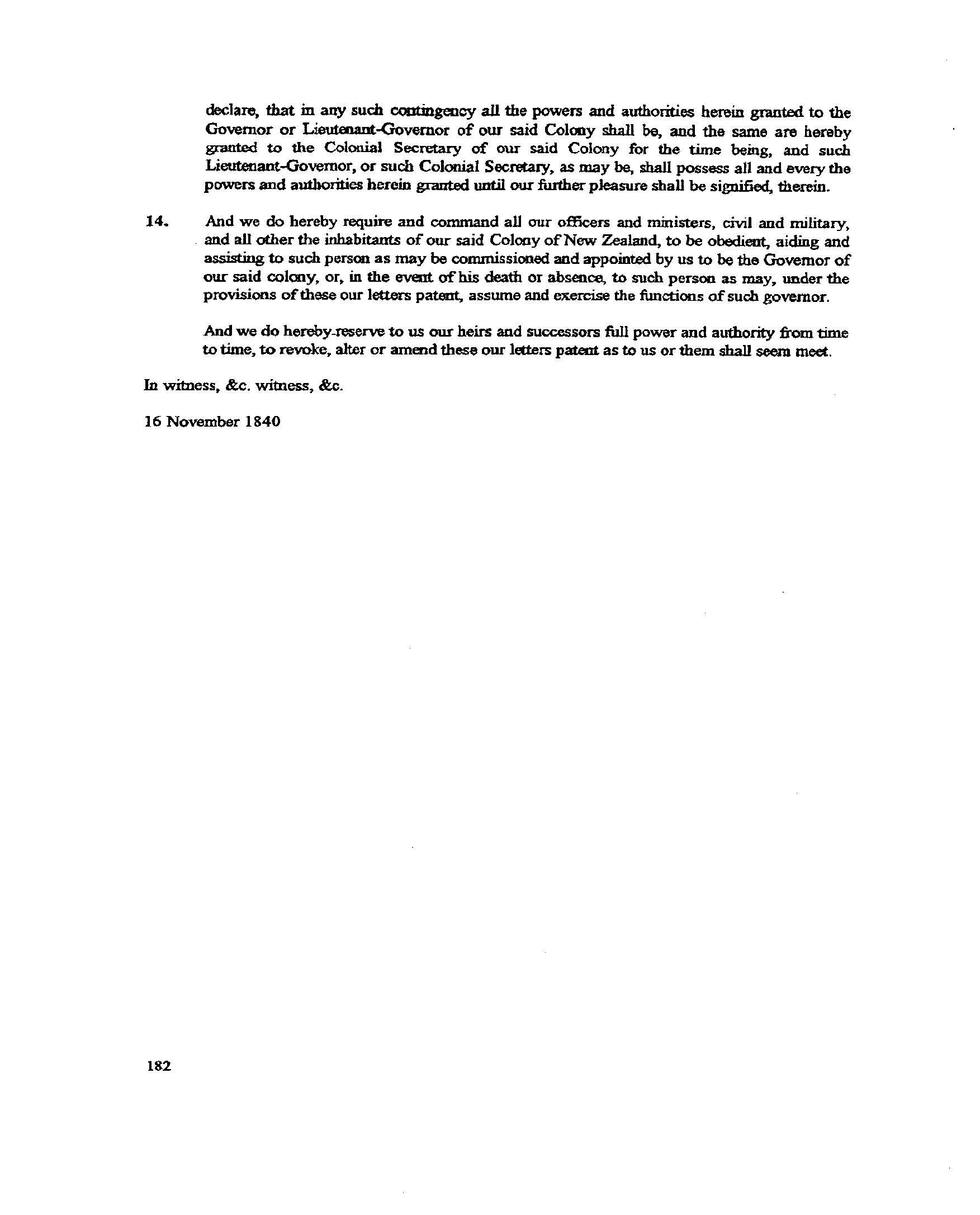
This is the Royal Charter/Letters Patent dated 16 November 1840 issued by “Victoria by the Grace of God” under “The Great Seal of the United Kingdom of Great Britain and Ireland”, that ratified the Treaty of Waitangi, separated New Zealand from New South Wales and made New Zealand into a British Colony with a Governor and Constitution that set up New Zealand’s political, legal and justice systems under one flag and one law irrespective of race, colour or creed.
Note. This Royal Charter ratified the Treaty of Waitangi.
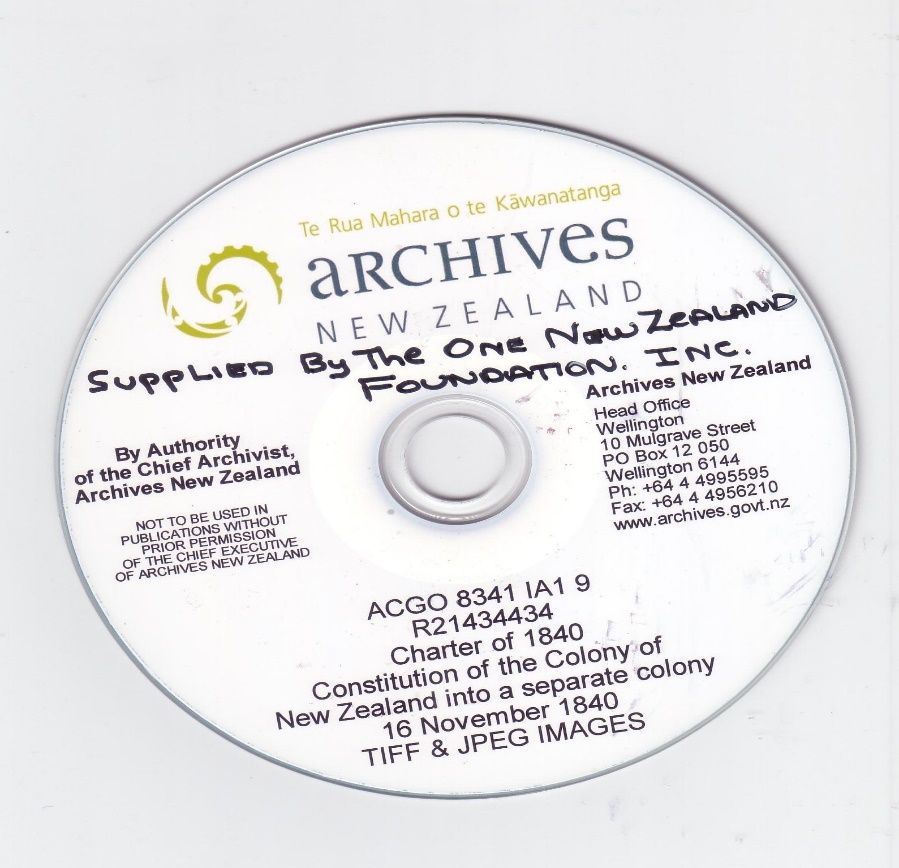
Disc supplied by the Chief Archivist, Archives New Zealand.
Disc of the Charter of 1840. Constitution of the Colony of New Zealand into a separate British Colony 16 November 1840.
FIRST SITTING OF THE LEGISLATIVE COUNCIL OF NEW ZEALAND.
(From the New Zealand Government Gazette)
His Excellency the Governor, according to notice, opened the first session of the legislative council of New Zealand on the 24th May 1841. Hon. W. Shortland, Colonial Secretary, Hon. Francis Fisher, Attorney General, Hon. George Cooper, Colonial Treasurer, E. S. Halswell, Esq., one of the three senior justices, being present, received the oaths and took their seats in the Legislative Council accordingly. James Coates, Esq., was appointed Clerk of the Council, and took the oaths of office. His Excellency then delivered the following speech :— Gentlemen—I have availed myself of this early period to assemble the members of the legislative council for the purpose of bringing under consideration certain measures which the altered circumstances of the Colony seem to me urgently to require. At this our first meeting I deem it proper to draw your attention, not only to the Royal Charter, but to the highly, important instructions under the Royal Signet and Sign Manual which accompany it. The Charter, as you are already aware, erects the islands of New Zealand and certain dependencies into a separate Colony, under the Superintendence of a Governor and Commander-in-Chief. It constitutes a Legislative Council, who are empowered to enact laws and ordinances for the local government of the Colony; it authorises the establishment of Courts of Justice, and the issue of Commissions of the Peace; and, in fact, brings into complete operation British laws throughout the whole Colony of New Zealand. The instructions under the Royal Signet and Sign Manual more particularly define the functions of the Governor and Council, and in a clear and conspicuous manner point out the duties of each. In order that you, gentlemen, may have an opportunity of acquainting yourselves with those particular duties, I have directed the instructions to be laid on the table, and kept open for your perusal in the Council Chamber. I regret that I cannot at the present meeting lay before you the Estimates of the ensuing year, which, although in a forward state of preparation, are in-complete, owing to the non-arrival of directions from the Lords of the Treasury, of which I am advised, and which may be daily expected. I shall lay before you an ordinance for the present re-adoption of all such acts of New South Wales as were in force previous to our separation and are now applicable to this colony. It is not my intention, however, eventually to propose for your adoption the laws of New South Wales, but it will be my endeavour, during the recess, aided by the advice and assistance of the Law Officers of the Crown, to prepare for your consideration such laws as will best provide for the administration of justice, and the contingencies of social life, which may be expected to arise in New Zealand ; therefore the measures now proposed to you must be deemed temporary and contingent, as re-sulting from the present peculiar condition of the Colony. By Command of Her Majesty I will bring under your consideration the repeal of the Land Commission Act, and submit for your adoption an ordinance for the same general purposes, but grant-ing to the Governor of New Zealand the same powers as those heretofore enjoyed by the Governor of New South Wales. I will likewise lay before you Bills for the regulation and collection of the revenue of Her Majesty's Customs, for establishing courts of quarter sessions and requests, and for the prohibition of distillation. These, gentlemen, are the only subjects for the present on which I shall require you to deliberate. We have, gentlemen, a solemn and important duty to perform ; by our means conflicting interests are to be reconciled ; harmony and tranquility established, and measures are to be adopted for improving the condition and elevating the character of the aboriginal inhabitants. In this salutary work I confidently look for your cordial assistance and co-operation, and I trust under Divine Providence we shall be enabled to accomplishi these important objects, and to give effect to Her Majesty's Gracious and benign views for the welfare, prosperity, and civilisation of this Colony. Alter laying on the table the Indemnity Bill, the Governor adjourned the Council until Thursday, the 27th May 1841.
New Zealand. Anno quarto Victoriæ Reginæ. No. 1. An Ordinance to declare that the laws of New South Wales, so far as they can be made applicable, shall extend to, and be in force in, Her Majesty's Colony of New Zealand from and subsequent to the date of Her Majesty's Royal Charter and Letters Patent, erecting into a separate Colony the Islands of New Zealand, and to indemnify the Lieutenant Governor and other officers thereof for certain Acts done and performed between the date of the said Royal Charter and Letters Patent and the day of passing this ordinance. Whereas by an Act of the Governor and Legislative Council of New South Wales, made and passed in the third year of the reign of Her present Majesty, entituled " An Act to declare that the Laws of New South Wales extend to Her Majesty's Dominions in the Islands of New Zealand, and to apply the same, as far as applicable, in the administration of justice therein, and to indemnify certain Officers for Acts already done." After reciting that Her Majesty had been pleased to annex Her Majesty's Dominions of New Zealand to the Government of New South Wales, it is enacted that all Laws and Acts or Ordinances of the Governor and Legislative Council of New South Wales, which then were, or thereafter might be, in force within the said Colony should extend to and be applied in the administration of justice within Her Majesty's Dominions in the said Islands of New Zealand, so far as they could be applied therein. And whereas, under and by virtue of an Act of Parliament made and passed in the fourth year of Her said Majesty's Reign, entituled, " An Act to continue until the thirty-first day of December, one thousand eight hundred and forty-one, and to the end of the then next ensuing Session of Parliament, the Provisions of any Act to provide for the Administration of Justice in New South Wales and Van Diemen's Land, and for the more effectual Government thereof, and for other purposes relative thereto," Her Majesty did, by Her Royal Charter and Letters Patent under the Great Seal of the United Kingdom of Great Britain and Ireland, bearing date at Westminster the sixteenth day of November, one thousand eight hundred and forty, erect into a separate Colony the Islands of New Zealand, theretofore comprised within or dependencies of the Colony of New South Wales, with all other islands lying between certain latitude and longitude therein mentioned. And did further provide that from thenceforth the said islands should be known and designated as the "Colony of New Zealand." And whereas, by Her said Royal Charter and Letters Patent, Her Majesty did constitute a Legislative Council for the said Colony of New Zealand, with full power and authority to make and ordain all such Laws and Ordinances as might be required for the peace, order, and good Government of the said Colony. And whereas it is expedient, until all such Laws and Ordinances can be well considered and ordained, that all such Laws, Acts, and Ordinances of New South Wales as are applicable to the Colony of New Zealand should continue to be acted upon and be applied therein. And, in order to remove any doubt which may exist whether the said Laws, Acts, or Ordinances of the said Governor and Legislative Council of New South Wales are and continue in force within the said Colony of New Zealand from and subsequent to the date and proclamation of such Her Majesty's Royal Charter and Letters Patent.
- Be it therefore enacted and ordained by his Excellency the Governor in and over the Colony of New Zealand, with the advice of the Legislative Council thereof, that so much of all and every of the Laws, Acts, and Ordinances heretofore made by the Governor and Legislative Council of New South Wales, and now in force therein, as have already been, and can hereafter during the continuance of this Ordinance be, applied within the said Colony of New Zealand shall be, and the same are hereby, adopted and declared and directed to be extended to and applied in the Administration of Justice in the said Colony of New Zealand, in the like manner as all other the Laws of England, and as if the same had been repeated and re-enacted in this Ordinance. And whereas doubts may arise as to the validity of Acts done and performed in the said Colony of New Zealand since the date of her said Majesty's Royal Charter and Letters Patent by his Excellency as the Lieutenant Governor of the same, and by Justices of the Peace, Officers of the Customs, Constables, and other officers, under and by virtue of the said in part recited Act of the Governor and Legislative Council of New South Wales ; for the removal whereof.
- Be it therefore further enacted that the said Lieutenant Governor of the Colony of New Zealand, and all Justices of the Peace, Officers of the Customs, Constables, and other officers, and all persons whom- soever therein who may have acted under and by virtue of any commission or appointment of her Majesty, or of the governor of New South Wales, or of the said lieutenant governor of the said colony of New Zealand, or under any orders and directions of the same Llieutenant Governor, or of his Excellency the Governor, since his assuming the Government of the said Colony of New Zealand, previous and up to the passing of this Ordinance, shall be, and they, and each and every one of them, are hereby indemnified against, and freed and discharged from, all damages, penalties, and forfeitures to which they, or any one of them, may have heretofore, or may now otherwise be liable for any act so done or performed.
- And be it further enacted that no act done or performed by any such officer or other person aforesaid, shall be questioned or avoided in any Court of Law, by reason of any supposed want of power and authority, and that all such acts so done and performed shall be, and they are declared to be, as valid and effectual in Law, to all intents and purposes, as if each of such officers and persons aforesaid had done and performed such acts within and under, or by virtue of, any Law or Statute of the Parliament of Great Britain and Ireland.
And be it further enacted and ordained that in all or any of the said Acts of the Governor and Legislative Council of New South Wales, which shall under and by virtue of this ordinance be brought into operation, and extended to and applied to the said Colony of New Zealand, whenever the words " Governor, with the advice of the Executive Council, Governor, Justice, or Justices of the Peace, or Government Gazette, of New South Wales," are used in such Act or Acts, the same words shall be construed to mean, and shall include and extend to " the Governor, with the advice of the Executive Council of New Zealand," or "Governor for the time being," or " all or any Justices or Justice of the Peace, and to the Government Gazette of the said Colony of New Zealand;" and that all words or expressions referring, and having relation, to New South Wales shall be, and the same are hereby directed to be, applied and construed to extend to the said Colony of New Zealand. WILLIAM HOBSON, Governor. Passed the legislative council this 3rd day of June, in the year of our Lord one thousand eight hundred and forty-one.
JAMES COATES, Clerk of Councils
All the above information can be found in the New Zealand, Australian and American Archives as well as the British Parliamentary Papers, but the Government has completely ignored New Zealand’s true Founding Documents that ratified the Treaty of Waitangi by making New Zealand into a British Colony under one flag and one law, irrespective of race, colour, or creed.
Prepared by Ross Baker, Researcher, One New Zealand Foundation Inc. 20/6/2019 (C).
Website: www.onenzfoundation.co.nz. Email: ONZF@bigpond.com.au
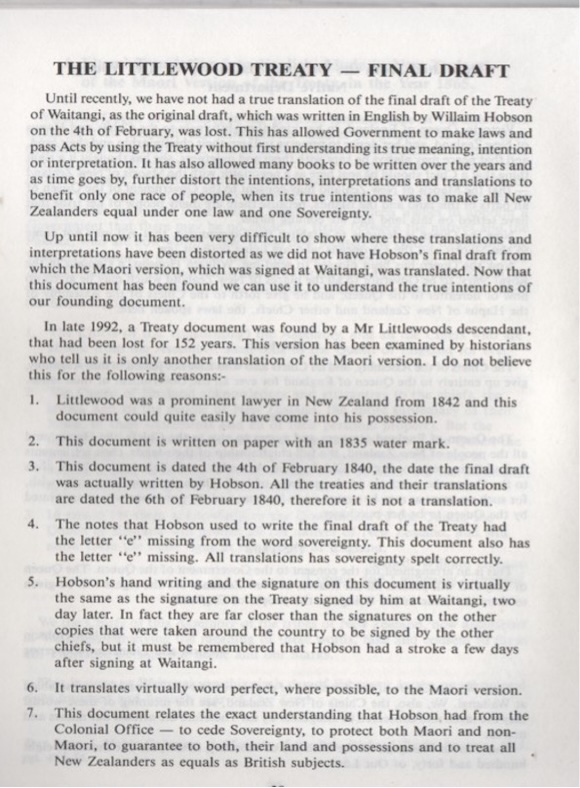
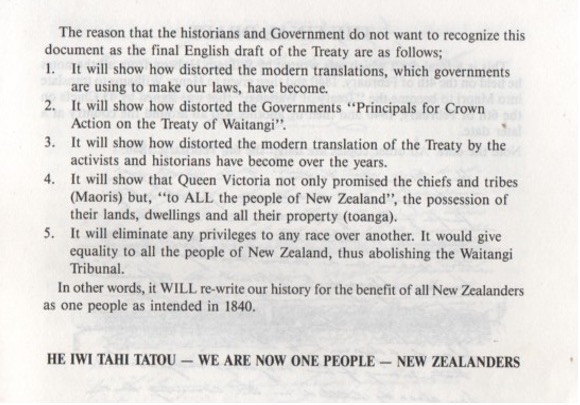
THE LITTLEWOOD TREATY – FINAL DRAFT
Published 04/06/2026 | THE LITTLEWOOD TREATY – FINAL DRAFT
By Ross Baker, Researcher, One New Zealand Foundation Inc.
“HE IWI TAHI TATOU – WE ARE NOW ONE PEOPLE”. Published 1992. ISBN 0 473 02600-7.
“From Treaty to Conspiracy – (Theory)”. Published, 1998. ISBN 0 473 05066-8.
NOTE
Since writing this in 1992, further researched has found the following,
- The final draft was written by James Busby under Lt. Governor Hobsons in structions.
- While the Final Draft stated the tangata Maori must give up their “sovereignty”, the Tiriti o Waitangi and all back translations, stated they must give up their “kawanatanga/governments”. See, kawantanga in the Declaration of Independence
- The Treaty of Waitangi was not our Founding Document, our true Founding document and first Constution was Queen Victoria’s Royal Charter/ Letters Patent dated 16 November 1840.
- The Treaty was drafted and signed while New Zealand was under the jurisdiction of New South Wales and only referred to tangata Maori, so could not be New Zealand’s Founding Document.
- The people that signed the Treaty of Waitangi were called “tangata Maori” not, “tangata whenua”.
Note.
On the night of 5 February 1840, Rev Richard Taylor re-wrote the Tiriti o Waitangi Governor Hobson had read and discussed with the chiefs at Waitangi onto dog skin. This original copy of the Tiriti o Waitangi that was written by James Busby and read to the Chief on 5 February 1840 by Governor Hobson, has never been found.
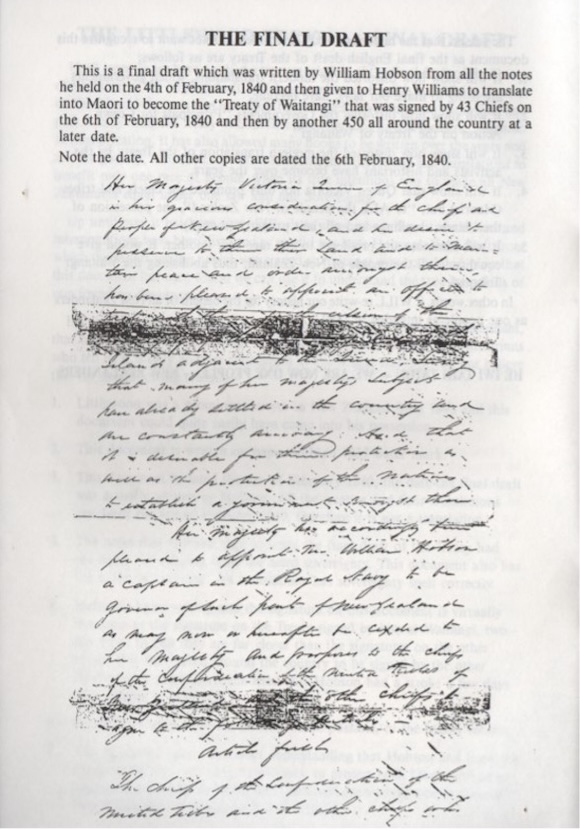
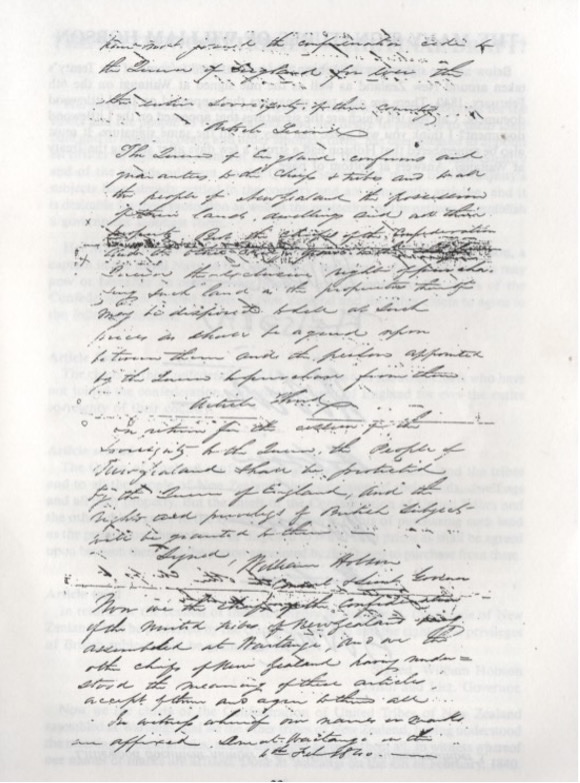
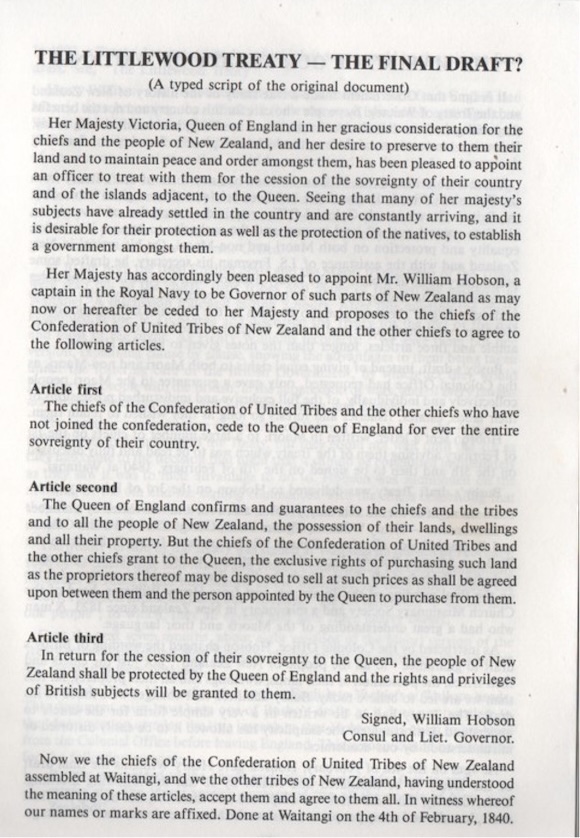
NOTE
A member of the One New Zealand Foundation Inc. knew John Littlewood and obtained a copy of Lt. Governor Hobson’s Final Draft, which I used in my 2 books 1992 and 1998 and Martin Doutre used in his book in 2005 and article in 2021.
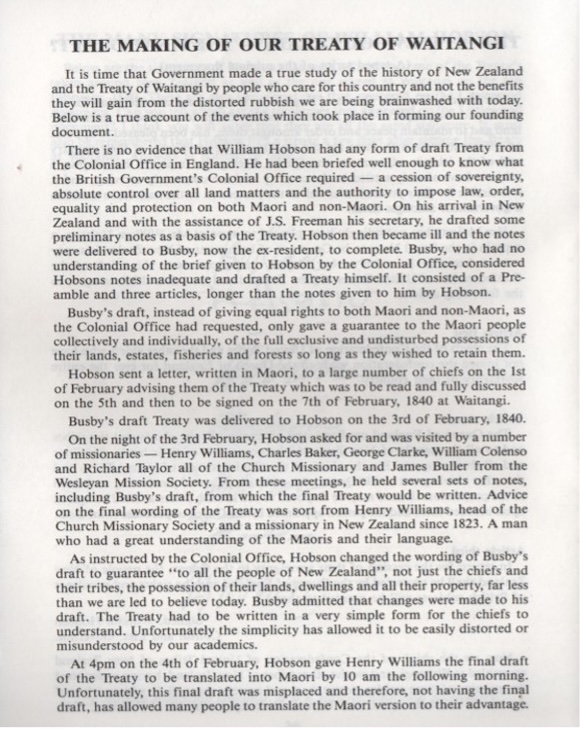
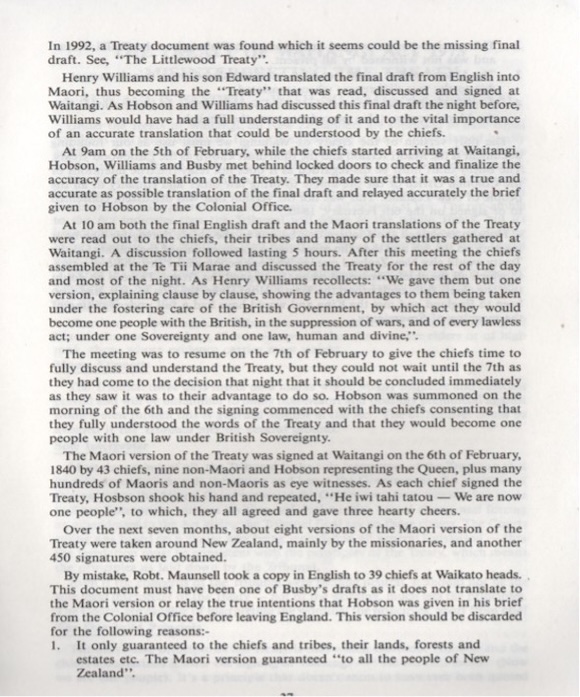
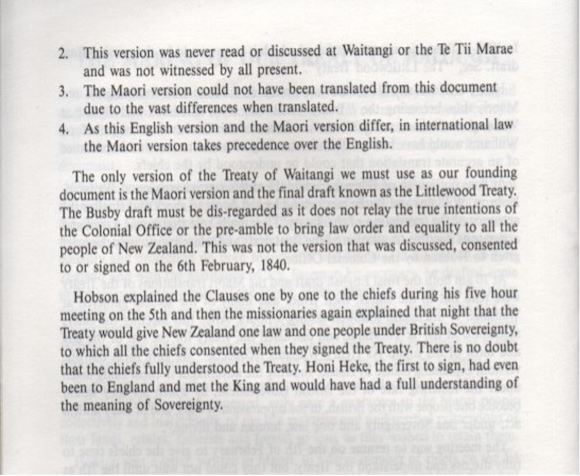
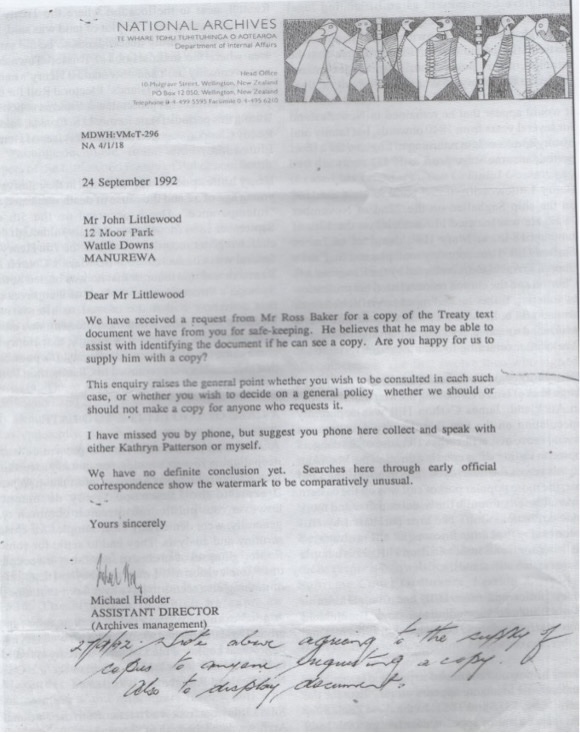
This is the letter John Littlewood received from Michael Holder, Assistant Director of National Archives on the 24 September 1992 asking John Littlewood if they could release a copy of the final draft to me. John reply is written on the bottom of the letter agreeing they could release it to anyone and could be used for display purposes. I never received a copy of the final draft from National Archives, but a member of the One New New Zealand Foundation Inc. knew John Littlewood and obtained a copy, which I used in my 2 books 1992 and 1998 and Martin Doutre used in his book in 2005.
All my research I did in 1989-92 into the Final Draft was given to Martin Doutre to write his book, The Littlewood Treaty – The True English Treaty of Waitangi Found”. Published 2005.
Sir John Key Destroyed New Zealand’s Democracy.
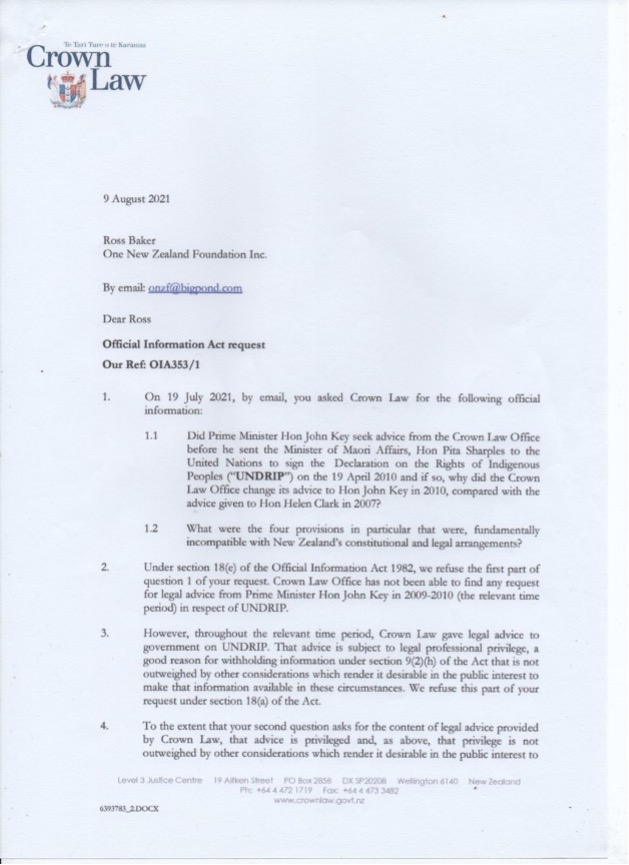
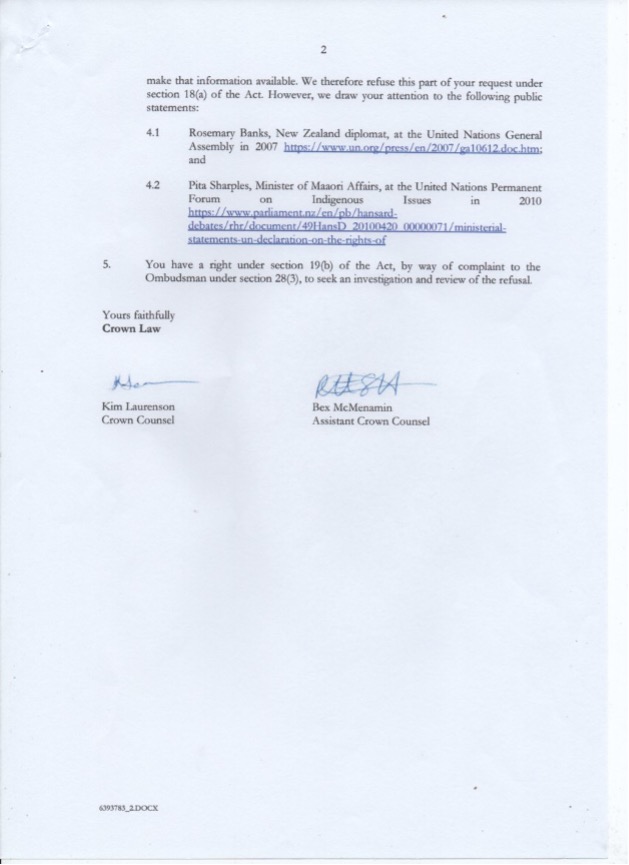
Published 18/12/2025 | On 13 September 2007, Rosemary Banks, New Zealand’s Permanent Representative to the United Nations explained to the United Nations the reason why New Zealand could not sign the Declaration of the Rights of the Indigenous People stating, “It was fundamentally incompatible with New Zealand’s constitutional and legal arrangements”, but this was completely ignored by the United Nations when the Hon Pita Sharples signed the Declaration on the 19 April 2010. WHY?
In 2007, Maori asked Prime Minster, Hon Helen Clark to sign the United Nations Declaration on the Rights of the Indigenous People, but New Zealand does not have a definition of the Indigenous People of New Zealand as well as, “Four provisions of the Declaration were fundamentally incompatible with New Zealand’s constitutional and legal arrangement”, therefore, she refused to sign it.
In 2010, Prime Minister Hon John Key sent the Minister of Maori Affairs, the Hon Pita Sharples to New York on 19 April to sign the United Nation’s Declaration of the Rights of the Indigenous People in secret!
Hon John Key must have known, Rosemary Banks, New Zealand’s Permanent Representative to the United Nations had explained to the United Nations the reason why New Zealand could not sign the Declaration of the Rights of the Indigenous People, why Hon Helen Clark had not signed the Declaration in 2007 and that New Zealand did not have a definition of the Indigenous people of New Zealand, but he went ahead and signed it in secret without a mandate from Parliament or the people of New Zealand. We believe this was solely for John Key to gain the Maori vote to stay in power as Prime Minister.
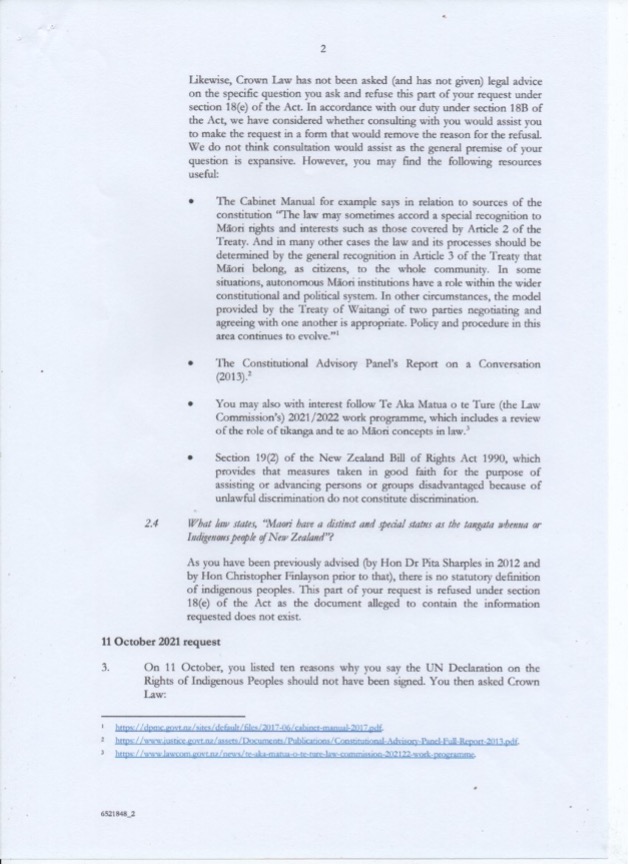
You will see from the OIA letter from Hon Pita Sharples below dated 2 April 2012, before he signed the Declaration, he told the United Nations, “Maori hold a distinct and special status as the indigenous people, or tanga whenua of New Zealand”. It is obvious Hon Pita Sharple’s knew, Maori are NOT the indigenous people, or tangata whenua of New Zealand, otherwise he would have stated, “Maori are the indigenous people, or tangata whenua of New Zealand”, but the United Nation’s accepted it.
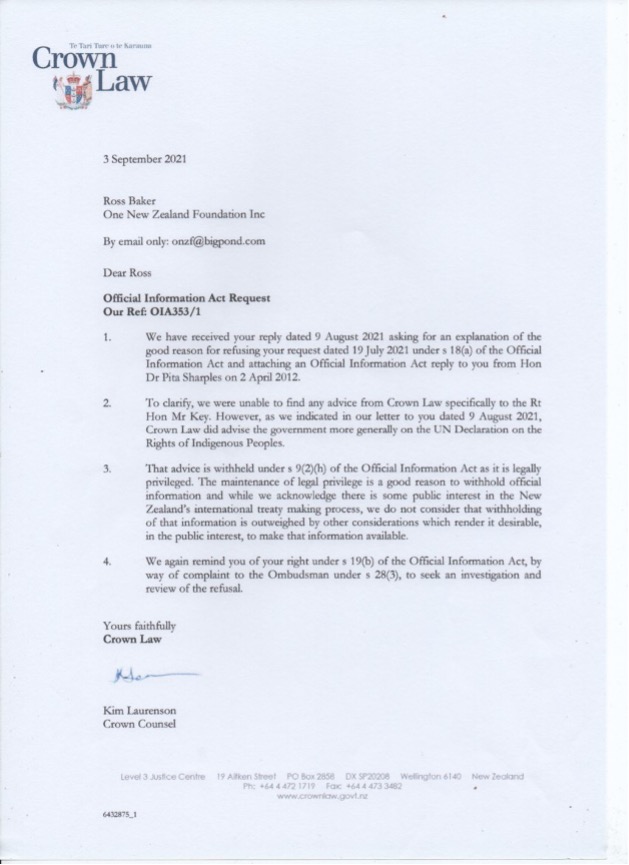
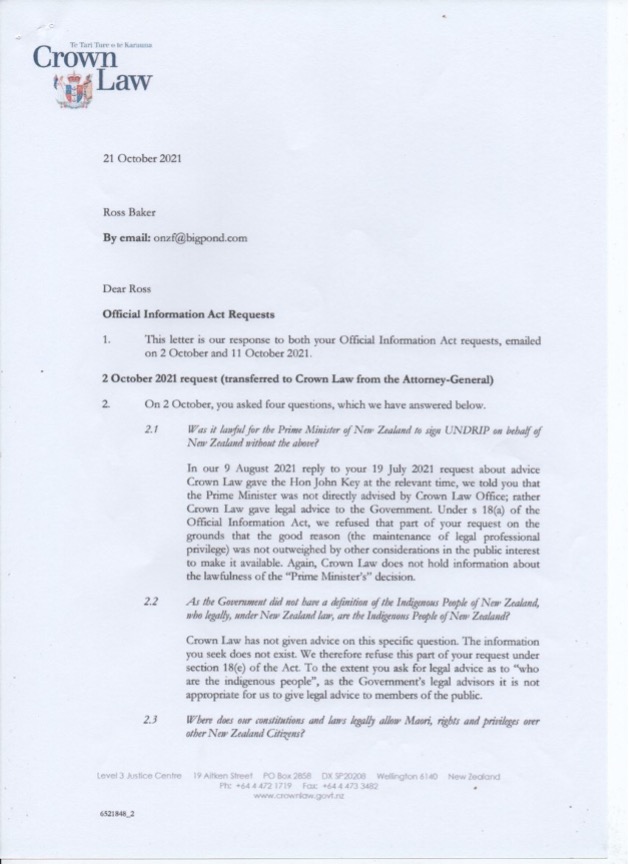
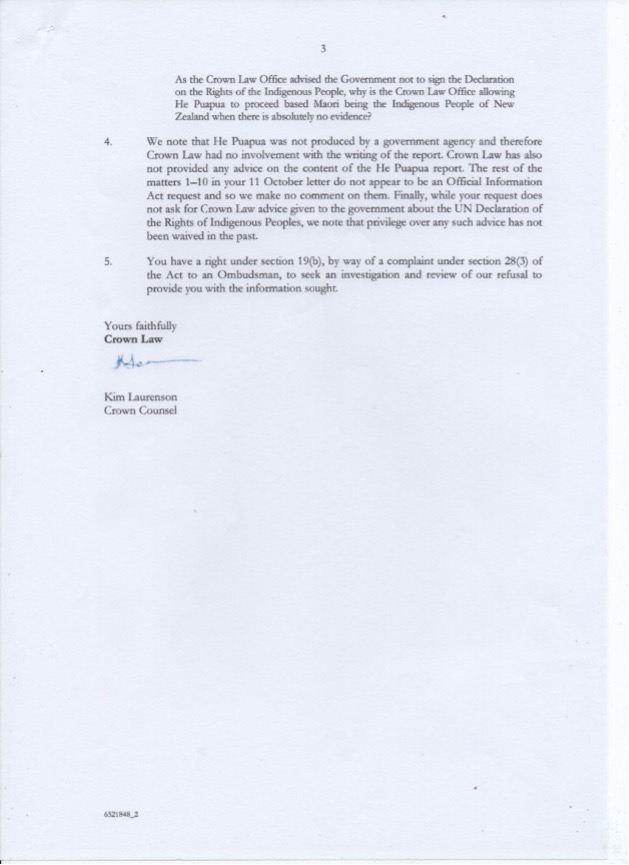
On 21 October 2021 in an OIA letter to the Crown Law Office, 2.4, we asked, “What law states, Maori have a distinct and special status as the tanga whenua or indigenous people of New Zealand”. The Crown Law Office replied, “You have been previously advised (by Hon Pita Sharples in 2012 and by Hon Christopher Finlayson prior to that), there is no statuary definition of indigenous people. This part of your request; (What law states, Maori have a distinct and special status as the tanga whenua or indigenous people of New Zealand), is refused under section 18(e) of the Act as the document alleged to contain the information requested does not exit”. Hon Pita Sharples lied to the United Nations.
By their own admission, the tangata Maori arrived in New Zealand by canoe in the 14th century to find New Zealand already inhabited by the tangata whenua.
As there is no statuary definition of the indigenous people of New Zealand and the document alleged to contain this information requested does not exit, then the United Nations accepted Maori as the Indigenous People, or tangata whenua of New Zealand, when New Zealand does not have a definition that Maori are in fact, “The Indigenous People of New Zealand”.
The Declaration on the Rights of the Indigenous People has given Maori special rights over all other New Zealand Citizens, allowing Maori, “A Partnership with the Crown” and possibly, “Co-Governance with the Crown”, based on the United Nations allowing Hon Pita Sharples to sign the Declaration without a definition of the indigenous people of New Zealand and completely ignoring New Zealand’s Permanent Representative to the United Nations, Rosemary Bank’s explanation in 2007, why it could not be signed.
The National Government then spent $7.2 million of taxpayer’s money to build the He Tohu Exhibition to house the Declaration of Independence and the Treaty of Waitangi to mislead the people, stating, “The Declaration of Independence and the Treaty of Waitangi are Iconic constitutional documents that shaped Aotearoa New Zealand”. The Declaration of Independence was a complete failure as James Busby could only entice 52 chiefs to sign it, and the Treaty of Waitangi only referred to the tangata Maori making them British Subjects with, “The same rights as the people of England if they gave up their kawanatanga/governments to the Queen”. In fact, the Treaty of Waitangi is not a treaty as it was only signed by one Sovereign Nation, Great Britain.
Queen Victoria’s Royal Charter/Letters Patent date the 16 November 1840 is New Zealand’s true Founding Document as it made New Zealand into a British colony with a Governor and Constitution, that set up New Zealand’s political, legal and justice systems under one flag and one law, irrespective of race, colour or creed, a British Colony under one flag and one law, irrespective of race colour or creed. See:
There is no other document in our history that comes anywhere near to a Founding Document than Queen Victoria’s Royal Charter/Letters Patent dated 16 November 1840!
The Government has no other option now, than to inform the United Nations, New Zealand does not have a definition of, “The Indigenous people or tangata whenua of New Zealand”, and they were informed in 2007 by Rosemary Banks, New Zealand’s Permanent Representative to the United Nations, “It was fundamentally incompatible with New Zealand’s constitutional and legal arrangements”, which has completely destroyed New Zealand’s democracy as agreed by the Treaty of Waitangi in 1840 and Queen Victoria’s Royal Charter/Letters Patent dated 16 November 1840, New Zealand true Founding Document.
Ministerial Statements on the UN Declaration on the Rights of Indigenous Peoples.
Tuesday, 20 April 2010
HON RODNEY HIDE: (Act Party Leader)
The ACT Party is both shocked and appalled to find itself supporting a government that has covertly given recognition to the United Nations Declaration on the Rights of Indigenous Peoples. The declaration asserts that Māori have rights and privileges not enjoyed by other New Zealanders. The declaration is the very antithesis of ACT’s policy of one law for all New Zealanders. It is the antithesis of the policy that we should have one law regardless of people’s religion, their race, the colour of their skin, their ethnicity, their culture, or indeed their degree of indigeneity. The declaration is divisive and is a further step for New Zealand down the path towards being a divided nation. The declaration clearly splits New Zealand into two rather than bringing New Zealand together as one.
For many the former Prime Minister, Helen Clark, refused to ratify the declaration. At the time, the Hon Parekura Horomia said that the declaration was incompatible with New Zealand’s laws and democratic processes and that it ignored reality and would be difficult to implement.
I am very disappointed that the Prime Minister, John Key, has covertly foisted the declaration on New Zealand, and I consider the statement that the recognition of this declaration has no practical effect to be naive in the extreme.
Hon JIM ANDERTON (Progressive Party Leader)
Well, which meaning did the Government sign up to? Did it not know? Has the Government read it? Does it know what it means? The answer to all those questions is no. It has nothing to do with it. It is to do with the deal between National and the Māori Party to get the Māori Party to run alongside and support the Government.
Hon Phil Goff (Leader Labour Party)
The declaration was signed in secrecy when Dr Sharples had “sneaked off” to New York. New Zealanders should have been told first that this was the intention of the Government, they should not have been told afterwards. There was a conflict between Dr Sharples’ view of the declaration and the Government’s position about it not making any practical difference. Labour had opposed the declaration which had unrealistic goals such as returning all land back to indigenous people. I could not see the point in signing up to a declaration that the Government did not intend to fulfil. Why would you sign up to something you never intended to act on, and you don’t believe in. He signed up to something they do not believe in and never intend to implement. Prime Minister Helen Clarke, Labour, refused to sign the Declaration in 2007 as it contravened our Constitution, but John Key was quite happy to destroy our democracy as long as he could become, Prime Minister, “Sir John Key”.
New Zealand does not have, A Definition of the Indigenous People of New Zealand.
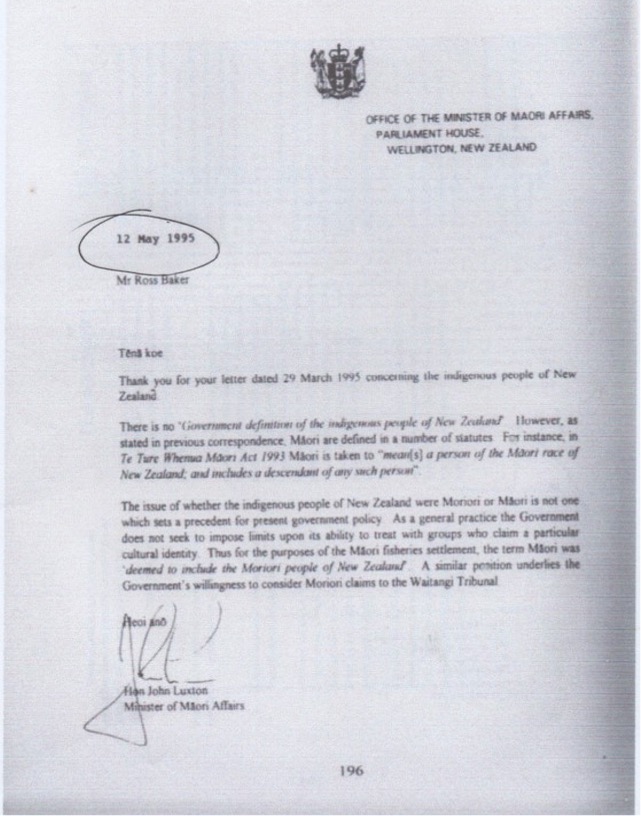
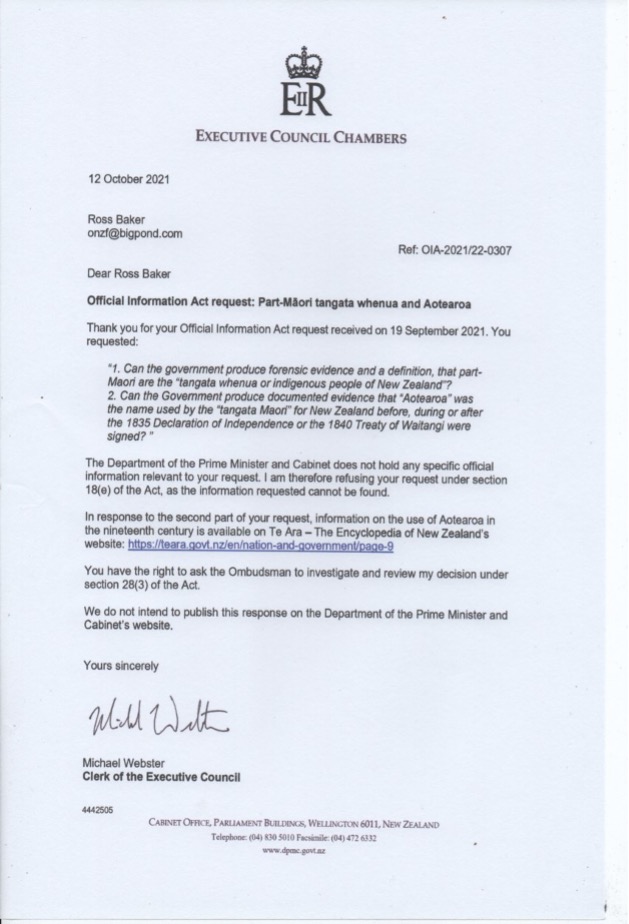
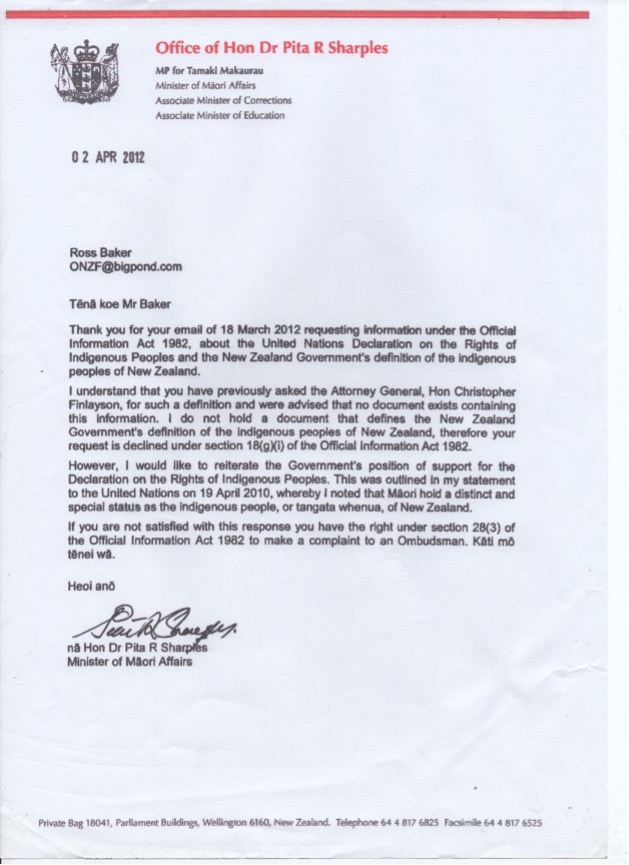
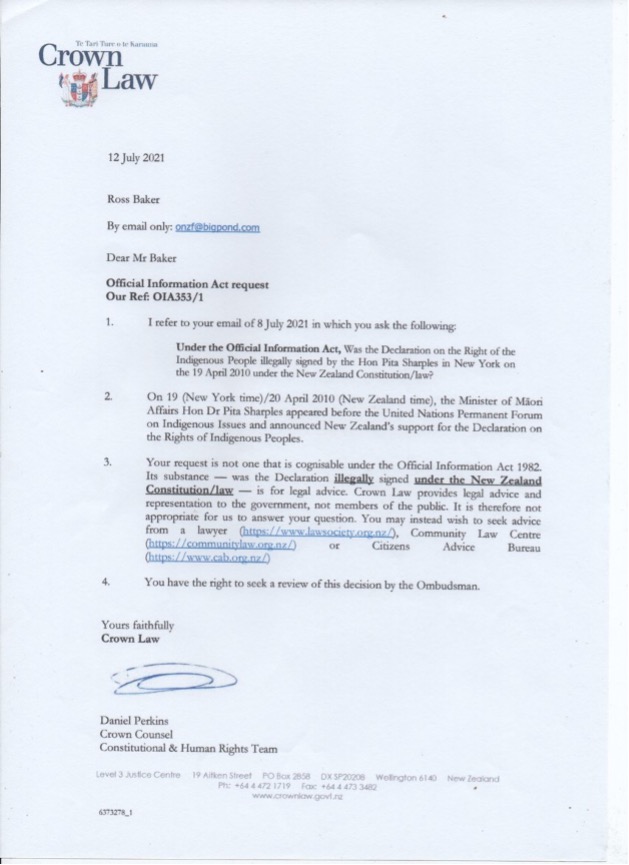
This article was written from documents held in the New Zealand, Australian and American Archives, plus the British Parliamentary Papers and Official Information Act letters received by the ONZF.
Website: www.onenzfoundation.co.nz. Email: ONZF@bigpond.com.au.
Colonization Did Not Destroy the Tangata Māori’s Way of Life.
Published 29/11/2025 | History ignored by Government and our modern-day historians.
 Colonization did not destroy the tangata Māori’s way of life, it was Hongi Hika, Ngāpuhi who destroyed it when he returned from England in 1820 with over 500 muskets and went on the rampage south with his followers, taking as slaves or killing thousands of his unarmed countrymen, women, and children for the fun of it and the feasts that followed. By 1830, the Southern tribes had also gained muskets and were not only attacking Ngāpuhi for utu/revenge, but the fighting between the tribes of New Zealand by 1840 became completely out of control with half the tangata Maori population being destroyed by their own hand. See: “Maori Wars of the 19th Century”, by S Percy Smith, “A Savage Country” and “This Horrid Practice” by Dr Paul Moon and the “Musket Wars” by R. O Crosby to name a few.
 If the tangata Maori race were to survive, Britain had to take a far greater interest in New Zealand and its people. In 1839, Britain place New Zealand under the dependency of New South Wales. In 1840, Queen Victoria offered the tangata Maori chiefs an ‘Agreement’; if they gave up their governments to Britain, they would become British Subjects with the same rights and protection as the people of England under English Law. Over 500 chiefs signed the ‘Agreement’ at Waitangi in 1840 and the tangata Maori became British Subjects under one flag and one law. On the 16 November 1840 Queen Victoria issued a Royal Charter/Letters Patent that separated New Zealand from New South Wales and made New Zealand into a British Colony with a Governor and constitution that set up New Zealand’s political legal and justice systems under one flag and one law, irrespective of race, colour or creed.
The Treaty of Waitangi was never New Zealand’s true Founding Document.
The Treaty of Waitangi was never New Zealand’s true Founding Document, in fact, it was not even a treaty as it was only signed by one Sovereign Nation, Britain. Maori were never a Sovereign Nation, therefore, the Treaty of Waitangi was only an “Agreement” between the tangata Maori and Queen Victoria. Queen Victoria asked the tangata Maori chiefs to give up their individual governments/tribal control and in return, they would become British Subjects with the same rights as the people of England. No more, no less. Under English Law, Queen Victoria did not have the authority to give Maori any special rights or privileges not enjoyed by all the people of England, and none were given. Today’s Maori, through the intermarriage of their ancestors’ own free will, are no longer the distinct race of people who signed this “Agreement” in 1840 or the indigenous people of New Zealand. Today, they are New Zealand Citizens with varying amounts of Maori ancestry.
See: Britain Fudged it to Get the Treaty Across the Line. | One New Zealand Foundation Inc.
New Zealand’s Two True Founding Documents and First Constitution.
- Queen Victoria’s Royal Charter/Letters Patent dated 30 July 1839, issued under, “The Great Seal of the United Kingdom of Great Britain and Ireland”, placed New Zealand under the dependency of the New South Wales Government. If New Zealand had been a Sovereign Nation in 1839, Britain could not have placed New Zealand under the dependency of New South Wales. See below.
- Queen Victoria’s Royal Charter/Letters Patent dated 16 November 1840, issued under, “The Great Seal of the United Kingdom of Great Britain and Ireland”, separated New Zealand from New South Wales and made New Zealand into a British Colony with a Governor and Constitution that set up New Zealand’s political, legal and justice systems under one flag and one law, irrespective of race, colour or creed. Our true Founding Document. See below.
Government Hides Founding Documents from the Public.
When the One New Zealand Foundation brought these two documents to the Public’s attention in 2015, the Government quickly dismantled the Constitution Room at Archives New Zealand, where they had been on public display for over 25 years, and hid them in Archives storeroom out of the public’s view in 2017. In fact, if future researchers want to research these documents, they must now order them, but this is only if they know they exist. Do you? See copies of Queen Victoria’s Royal Charters below.
First Sitting of New Zealand’s Legislative Council in 1841.
The New Zealand Legislative Council was established in 1841 by Queen Victoria’s Royal Charter/Letters Patent dated 16 November 1840 when New Zealand was created as a Crown Colony separate from New South Wales. The Council was composed of the Governor, the Colonial Secretary, the Colonial Treasurer, and Justices of the Peace. The first session of the Legislative Council was held in Auckland from 24 May to 10 July 1841. The initial Members were William Hobson as Governor, Willoughby Shortland as Colonial Secretary, Frances Fisher as Attorney General, George Cooper as Colonial Treasurer, and a number of Senior Justices of the Peace. The Council’s first ordinance was a temporary measure of adopting the laws of New South Wales. The Legislative Council’s main role was to enact laws and ordinances for the Government of the Colony and to establish Courts of Justice under one flag and one law, irrespective of race colour or creed. See copy of the First Sitting of the Legislative Council below.
There are no other documents in our history that come anywhere near to New Zealand’s true Founding Documents and first Constitution than Queen Victoria’s two Royal Charters of 1839 and 1840. They referred to all the people of New Zealand under one flag and one law, irrespective of race, colour or creed.
QUEEN VICTORIA’S TWO ROYAL CHARTERS/LETTERS PATENT
The following information has been obtained by the One New Zealand Foundation Inc. from New Zealand, Australian and American Archives, plus the British Parliamentary Papers.
Queen Victoria’s Royal Charter/Letters Patent dated 30 July 1839 placed New Zealand under the dependency of the New South Wales Government. Queen Victoria’s Royal Charter/Letters Patent dated 16 November 1840 separated New Zealand from New South Wales dependency and made New Zealand into a British Colony with a Governor and Constitution that set up our political, legal and justice systems under one flag and one law, irrespective of race, colour, or creed. See copy of 1839 Royal Charters/Letters Patent below.
Both Royal Charters/Letters Patent were issued by “Victoria by the Grace of God” under, “The Great Seal of the United Kingdom of Great Britain and Ireland”.
At the end of 1840, the “Treaty/Agreement” had achieved its purpose and was filed away where it was later damaged by fire and rats. Maori had given up their individual governments and become British Subjects with the same rights as the people of England. Under English Law, Queen Victoria did not have the authority to give the tangata Maori any rights or privileges not enjoyed by all the people of England, and none were given. Britain claim sovereignty over New Zealand that was recognised by the rest of the world on 2 October 1840.
Britain could now separate New Zealand from New South Wales jurisdiction and dependency and make New Zealand into a British Colony with a Governor and Constitution to form a government under one flag and one law, irrespective of race colour or creed. This was achieved by Queen Victoria’s 1840 Royal Charter/Letters Patent on 3 May 1841. See copy of 1840 Royal Charters/Letters Patent below.
Both Royal Charters/Letters Patent have been completely ignored by governments and most historians. In fact, on 17 April 2017 the Government allowed Archives New Zealand to dismantle the Constitution Room at Archives New Zealand and place the Royal Charters of 1839 and 1840 in Archive’s repository amongst the other 6 million documents and out of the public’s view. To research these documents now, researchers must order them, that is, if they know they exist. Do you?
Queen Victoria’s 1839 Royal Charters/Letters Patent
A vital part of our history governments has hidden from the public.
Below is the ‘Charter/Letters Patent’ appointing William Hobson as Lieutenant Governor of New Zealand and extending the boundaries of New South Wales to include all the islands of New Zealand in 1839. Sir George Gipps, Governor of New South Wales was in fact, the first Governor of New Zealand with Captain William Hobson as his Lieutenant.
1839 Charter/Letters Patent for New Zealand and New South Wales.

The Royal Charter/Letters Patent reads,
Victoria R
Victoria by the Grace of God of the United Kingdom of Great Britain and Ireland Queen, Defender of the Faith – To Our Trusty and Well beloved, William Hobson Esquire, Captain of the Royal Navy Greeting. Whereas We did by certain Letters Patent under the Great Seal of Our United Kingdom of Great Britain and Ireland bearing date at Westminster the 5th day of October 1837 in the First year of Our Reign constitute and appoint Our Trusty and Well beloved, Sir George Gipps, Knight, to be Our Captain General and Governor in Chief in and over Our Territory of New South Wales, comprised within the limits therein mentioned. And Whereas We did by certain other Letters Patent under the Great Seal of Our said United Kingdom, bearing date at Westminster the 15th day of June 1839 in the Third Year of Our Reign revoke so much of the said first recited Letters Patent as describes the limits of Our said Territory of New South Wales, and did further extend the limits of Our said Territory of New South Wales (subject to such exception as is therein particularly made of certain Territories now forming the Province of South Australia) from the Northern Cape or extremity of the Coast called Cape York in the latitude of 10 Degrees 37 Minutes South to the Southern extremity of the said Territory of New South Wales or Wilson’s promontory in the latitude of 39 Degrees 12 Minutes South and of all of the Country inland to the Westward as far as the 129th Degree of East longitude reckoning for the Meridian of Greenwich including all the Islands adjacent in the Pacific Ocean within the latitude aforesaid of 10 Degrees 37 Minutes South and 39 Degrees 12 Minutes South, and also including Norfolk Island lying in or about the latitude of 29 Degrees 3 Minutes South and 168 Degrees of East Longitude from the said Meridian of Greenwich, and also including any Territory which is or maybe acquired in Sovereignty by Us Our Heirs or Successors within that group of Islands in the Pacific Ocean commonly called New Zealand, and lying in or about the latitude of 34 Degrees 30 Minutes North and 47 Degrees 10 Minutes South, and 166 Degrees 5 Minutes and 179 Degrees East longitude from the said Meridian of Greenwich. Now Know you that We reposing especial Trust and Confidence in the Prudence Courage and Loyalty of you the said William Hobson do by these Present constitute and appoint you to be Our Lieutenant Governor in and over that part of Our Territory so described as foresaid in Our said last recited Letters Patent which is or maybe acquired in Sovereignty by Us Our Heirs or Successors within that group of Islands in the Pacific Ocean commonly called New Zealand, lying in or about the latitude of 34 Degrees 30 Minutes North and 47 Degrees 10 Minutes South, and 166 Degrees 5 Minutes and 179 Degrees East longitude reckoning from the Meridian of Greenwich. To have hold exercise and enjoy the said Office of Lieutenant Governor during Our Pleasure: And We do hereby command that in the execution of such your Office you do obey all such lawful Instructions as may be from time to time addressed to you by Our Trusty and Well beloved Sir George Gipps, Our Captain General and Governor in Chief in and over Our Territory of New South Wales and its Dependencies or in the event of his death or absence from the limits of his Government and command by the Officer for the time being administering the Government of Our said Territory and its Dependencies. And Whereas it is necessary that provision be made for the execution of the Office of Our Lieutenant Governor of Our said Territories in New Zealand in the event of your Death or absence therefrom, We do therefore by these Presents authorise and empower the said Sir George Gipps or the Officer Administering the Government of Our said Territory of New South Wales and its Dependencies for the time being to nominate and appoint by an Instrument under the Public Seal of Our said Territory of New South Wales, such person as he may think fit to act provisionally as Our Lieutenant Governor of Our said Territories in New Zealand in the contingency of such your Death or absence therefrom, or until other or further provision shall be made by Us in that behalf. And We do hereby give and grant to the Officer so to be provisionally appointed as aforesaid, during the continuance of such his authority full power to hold exercise and enjoy the said Office of Our Lieutenant Governor of Our said Territories in New Zealand as fully and in every respect as effectually as the same as is hereby vested in you, or may be by virtue hereof be held, exercised or enjoyed by you – Given at Our Court at Buckingham Palace the 30th day of July 1839, in the Third Year of Our Reign. By Her Majesty’s Command, Lord Normandy.
This is the Royal Charter/Letters Patent dated 30 July 1839 issued by “Victoria by the Grace of God” under “The Great Seal of the United Kingdom of Great Britain and Ireland” that extended the boundaries and laws of New South Wales over all the islands of New Zealand. There is no mention of the Treaty of Waitangi in this Charter.
Below is Queen Victoria’s Royal Charter/Letters Patent dated, 16 November 1840. The Constitution of the Colony of New Zealand into a separate colony on 3 May 1841. Archives New Zealand Ref. No. ACGO 8341 1A1 9.
Royal Charter of 1840. Constitution of the Colony of New Zealand into a separate Colony 3 May 1841.
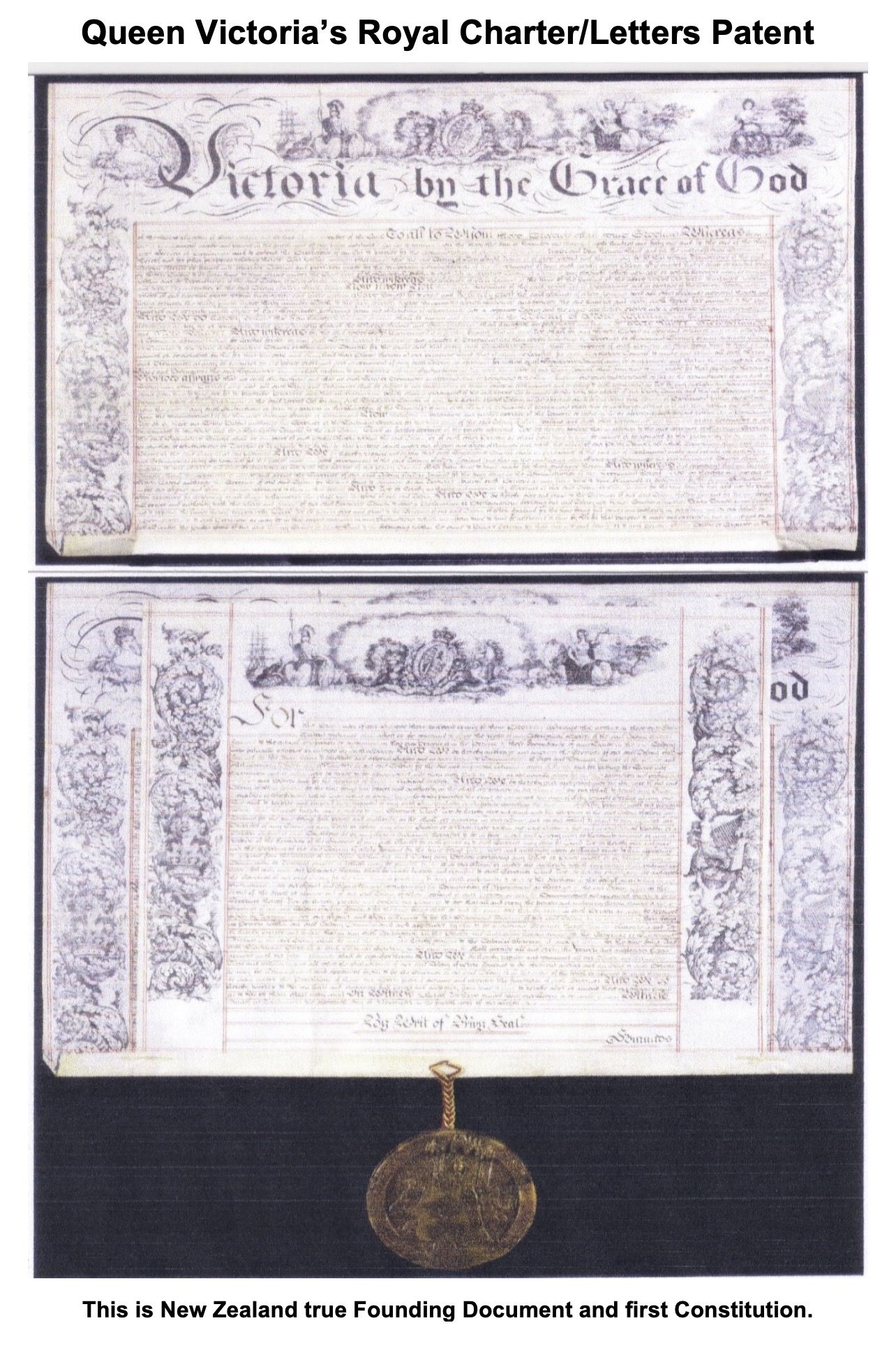
The Constitution Reads:


Above is the “Constitutional Charter” dated 16 November 1840 issued by “Victoria by the Grace of God” under “The Great Seal of the United Kingdom of Great Britain and Ireland” that separated New Zealand from New South Wales and made New Zealand into a British Colony with a Governor and Constitution that set up New Zealand’s political, legal and justice systems under one flag and one law irrespective of race, colour or creed. There is no mention of the Treaty of Waitangi in this Charter.
FIRST SITTING OF THE LEGISLATIVE COUNCIL OF NEW ZEALAND.
(From the New Zealand Government Gazette)
His Excellency the Governor, according to notice, opened the first session of the legislative council of New Zealand on the 24th May 1841. Hon. W. Shortland, Colonial Secretary, Hon. Francis Fisher, Attorney General, Hon. George Cooper, Colonial Treasurer, E. S. Halswell, Esq., one of the three senior justices, being present, received the oaths and took their seats in the Legislative Council accordingly. James Coates, Esq., was appointed Clerk of the Council, and took the oaths of office. His Excellency then delivered the following speech :— Gentlemen—I have availed myself of this early period to assemble the members of the legislative council for the purpose of bringing under consideration certain measures which the altered circumstances of the Colony seem to me urgently to require. At this our first meeting I deem it proper to draw your attention, not only to the Royal Charter, but to the highly, important instructions under the Royal Signet and Sign Manual which accompany it. The Charter, as you are already aware, erects the islands of New Zealand and certain dependencies into a separate Colony, under the Superintendence of a Governor and Commander-in-Chief. It constitutes a Legislative Council, who are empowered to enact laws and ordinances for the local government of the Colony; it authorises the establishment of Courts of Justice, and the issue of Commissions of the Peace; and, in fact, brings into complete operation British laws throughout the whole Colony of New Zealand. The instructions under the Royal Signet and Sign Manual more particularly define the functions of the Governor and Council, and in a clear and conspicuous manner point out the duties of each. In order that you, gentlemen, may have an opportunity of acquainting yourselves with those particular duties, I have directed the instructions to be laid on the table, and kept open for your perusal in the Council Chamber. I regret that I cannot at the present meeting lay before you the Estimates of the ensuing year, which, although in a forward state of preparation, are in-complete, owing to the non-arrival of directions from the Lords of the Treasury, of which I am advised, and which may be daily expected. I shall lay before you an ordinance for the present re-adoption of all such acts of New South Wales as were in force previous to our separation, and are now applicable to this colony. It is not my intention, however, eventually to propose for your adoption the laws of New South Wales, but it will be my endeavour, during the recess, aided by the advice and assistance of the Law Officers of the Crown, to prepare for your consideration such laws as will best provide for the administration of justice, and the contingencies of social life, which may be expected to arise in New Zealand ; therefore the measures now proposed to you must be deemed temporary and contingent, as re-sulting from the present peculiar condition of the Colony. By Command of Her Majesty I will bring under your consideration the repeal of the Land Commission Act, and submit for your adoption an ordinance for the same general purposes, but grant-ing to the Governor of New Zealand the same powers as those heretofore enjoyed by the Governor of New South Wales. I will likewise lay before you bills for the regulation and collection of the revenue of Her Majesty’s Customs, for establishing courts of quarter sessions and requests, and for the prohibition of distillation. These, gentlemen, are the only subjects for the present on which I shall require you to deliberate. We have, gentlemen, a solemn and important duty to perform ; by our means conflicting interests are to be reconciled ; harmony and tranquility established, and measures are to be adopted for improving the condition and elevating the character of the aboriginal inhabitants. In this salutary work I confidently look for your cordial assistance and co-operation, and I trust under Divine Providence we shall be enabled to accomplishi these important objects, and to give effect to Her Majesty’s Gracious and benign views for the welfare, prosperity, and civilisation of this Colony. Alter laying on the table the Indemnity Bill, the Governor adjourned the Council until Thursday, the 27th May, 1841.
New Zealand. Anno quarto Victoriæ Reginæ. No. 1. An Ordinance to declare that the laws of New South Wales, so far as they can be made applicable, shall extend to, and be in force in, Her Majesty’s Colony of New Zealand from and subsequent to the date of Her Majesty’s Royal Charter and Letters Patent, erecting into a separate Colony the Islands of New Zealand, and to indemnify the Lieutenant Governor and other officers thereof for certain Acts done and performed between the date of the said Royal Charter and Letters Patent and the day of passing this ordinance. Whereas by an Act of the Governor and Legislative Council of New South Wales, made and passed in the third year of the reign of Her present Majesty, entituled ” An Act to declare that the Laws of New South Wales extend to Her Majesty’s Dominions in the Islands of New Zealand, and to apply the same, as far as applicable, in the administration of justice therein, and to indemnify certain Officers for Acts already done.” After reciting that Her Majesty had been pleased to annex Her Majesty’s Dominions of New Zealand to the Government of New South Wales, it is enacted that all Laws and Acts or Ordinances of the Governor and Legislative Council of New South Wales, which then were, or thereafter might be, in force within the said Colony should extend to and be applied in the administration of justice within Her Majesty’s Dominions in the said Islands of New Zealand, so far as they could be applied therein. And whereas, under and by virtue of an Act of Parliament made and passed in the fourth year of Her said Majesty’s Reign, entituled, ” An Act to continue until the thirty-first day of December, one thousand eight hundred and forty-one, and to the end of the then next ensuing Session of Parliament, the Provisions of any Act to provide for the Administration of Justice in New South Wales and Van Diemen’s Land, and for the more effectual Government thereof, and for other purposes relative thereto,” Her Majesty did, by Her Royal Charter and Letters Patent under the Great Seal of the United Kingdom of Great Britain and Ireland, bearing date at Westminster the sixteenth day of November, one thousand eight hundred and forty, erect into a separate Colony the Islands of New Zealand, theretofore comprised within or dependencies of the Colony of New South Wales, with all other islands lying between certain latitude and longitude therein mentioned. And did further provide that from thenceforth the said islands should be known and designated as the “Colony of New Zealand.” And whereas, by Her said Royal Charter and Letters Patent, Her Majesty did constitute a Legislative Council for the said Colony of New Zealand, with full power and authority to make and ordain all such Laws and Ordinances as might be required for the peace, order, and good Government of the said Colony. And whereas it is expedient, until all such Laws and Ordinances can be well considered and ordained, that all such Laws, Acts, and Ordinances of New South Wales as are applicable to the Colony of New Zealand should continue to be acted upon and be applied therein. And, in order to remove any doubt which may exist whether the said Laws, Acts, or Ordinances of the said Governor and Legislative Council of New South Wales are and continue in force within the said Colony of New Zealand from and subsequent to the date and proclamation of such Her Majesty’s Royal Charter and Letters Patent.
- Be it therefore enacted and ordained by his Excellency the Governor in and over the Colony of New Zealand, with the advice of the Legislative Council thereof, that so much of all and every of the Laws, Acts, and Ordinances heretofore made by the Governor and Legislative Council of New South Wales, and now in force therein, as have already been, and can hereafter during the continuance of this Ordinance be, applied within the said Colony of New Zealand shall be, and the same are hereby, adopted and declared and directed to be extended to and applied in the Administration of Justice in the said Colony of New Zealand, in the like manner as all other the Laws of England, and as if the same had been repeated and re-enacted in this Ordinance. And whereas doubts may arise as to the validity of Acts done and performed in the said Colony of New Zealand since the date of her said Majesty’s Royal Charter and Letters Patent by his Excellency as the Lieutenant Governor of the same, and by Justices of the Peace, Officers of the Customs, Constables, and other officers, under and by virtue of the said in part recited Act of the Governor and Legislative Council of New South Wales ; for the removal
- Be it therefore further enacted that the said Lieutenant Governor of the Colony of New Zealand, and all Justices of the Peace, Officers of the Customs, Constables, and other officers, and all persons whom- soever therein who may have acted under and by virtue of any commission or appointment of her Majesty, or of the governor of New South Wales, or of the said lieutenant governor of the said colony of New Zealand, or under any orders and directions of the same Llieutenant Governor, or of his Excellency the Governor, since his assuming the Government of the said Colony of New Zealand, previous and up to the passing of this Ordinance, shall be, and they, and each and every one of them, are hereby indemnified against, and freed and discharged from, all damages, penalties, and forfeitures to which they, or any one of them, may have heretofore, or may now otherwise be liable for any act so done or performed.
- And be it further enacted that no act done or performed by any such officer or other person aforesaid, shall be questioned or avoided in any Court of Law, by reason of any supposed want of power and authority, and that all such acts so done and performed shall be, and they are declared to be, as valid and effectual in Law, to all intents and purposes, as if each of such officers and persons aforesaid had done and performed such acts within and under, or by virtue of, any Law or Statute of the Parliament of Great Britain and Ireland.
And be it further enacted and ordained that in all or any of the said Acts of the Governor and Legislative Council of New South Wales, which shall under and by virtue of this ordinance be brought into operation, and extended to and applied to the said Colony of New Zealand, whenever the words ” Governor, with the advice of the Executive Council, Governor, Justice, or Justices of the Peace, or Government Gazette, of New South Wales,” are used in such Act or Acts, the same words shall be construed to mean, and shall include and extend to ” the Governor, with the advice of the Executive Council of New Zealand,” or “Governor for the time being,” or ” all or any Justices or Justice of the Peace, and to the Government Gazette of the said Colony of New Zealand;” and that all words or expressions referring, and having relation, to New South Wales shall be, and the same are hereby directed to be, applied and construed to extend to the said Colony of New Zealand. WILLIAM HOBSON, Governor. Passed the legislative council this 3rd day of June, in the year of our Lord one thousand eight hundred and forty-one.
JAMES COATES, Clerk of Councils
“Charter of 1840. Constitution of the Colony of New Zealand into a separate colony, 16 November 1840”

Disc supplied by the Chief Archivist, Archives New Zealand.
Queen Victoria’s Royal Charter/Letters Patent Dated the 16 November 1840.
There is no other document in our history that comes anywhere near to New Zealand’s true Founding Document and first Constitution than Queen Victoria’s Royal Charter/Letters Patent dated 16 November 1840. It separated New Zealand from New South Wales dependency and made New Zealand into a British Colony with a Governor and Constitution that set up New Zealand’s political, legal and justice systems under one flag and one law, irrespective of race, colour or creed. Without Queen Victoria’s Royal Charter/Letters Patent dated 16 November 1840, New Zealand would have remained under the dependency of New South Wales.
Prepared by the One New Zealand Foundation Inc. from documents held in the New Zealand, Australian and American Archives, plus the British Parliamentary Papers. 10/6/2021 (C).
For further information: www.onenzfoundation.co.nz. OR Email: ONZF@bigpond.com.au
Britain Fudged it to Get the Treaty Across the Line.
Published 01/10/2025 | On 5 September 2025, Julian Batchelor, Stop Co-Governance, wrote the following email stating, “The reason the British declared NZ to be a sovereign nation was so that they could sign a treaty with Maori. For a treaty to be effectual legally, it has to be between two sovereign nations. i.e. Britain fudged it to get the Treaty across the line”. But was ‘sovereignty’ fudged it to get the Treaty across the line?
Since this time, we have given this a lot of thought and while Britain may have, “Tried to fudge the Treaty to get it across the line”, when the facts are known, those involved in translating the final draft of the Treaty of Waitangi, knew Maori could not, and did not have sovereignty over New Zealand in 1840.
Lord Normanby’s treaty instructions to Captain William Hobson, dated 14 August 1839, stated, “We acknowledge New Zealand as a sovereign and independent State”, but he then went on to say, “So far at least as it is possible to make such acknowledgment in favour of a people composed of numerous, dispersed, and petty tribes, who possess few political relations to each other, and are incompetent to act, or even to deliberate in concert”. From this clause, Lord Normanby knew Maori could not, and did not have sovereignty over New Zealand in 1840.
Rev Henry Williams and his son Edward would not allow the Treaty, “To be fudged to get it across the line” and changed “sovereignty” to “government/kawanatanga” when they translated Lt. Governor Hobson’s final draft into the Tiriti o Waitangi, on the night of 4 February 1840.
“Kawanatanga” was the word Rev Henry Williams had used for “government” in the 1835 Declaration of Independence and had translated “Sovereignty” to “Kingitanga”. Every Tiriti o Waitangi and Maori to English dictionary also has “kawanatanga” translated to “government”.
Before the Treaty was read to the gathering at Waitangi on 5 February 1840, Lt. Governor Hobson, British Resident James Busby and Rev. Henry Williams met behind closed doors to check Rev Henry William’s translation of the Treaty of Waitangi into the Maori language; Te Tiriti o Waitangi. Both Hobson and Busby agree with the word “sovereignty” being changed to “kawanatanga/government” as they also knew Maori could not and did not have “sovereignty” over New Zealand in 1840.
British Resident James Busby had tried to get the chiefs to claim sovereignty over New Zealand with his Declaration of Independence in 1835, but as he could only entice 52 chiefs out of about 600 to sign the Declaration due to the tension and fighting between the tribes, the Declaration was abandoned without one meeting ever taking place. Rev Henry Williams had used the word “Kingitanga” for “Sovereignty” and “kawanatanga” for “government” when he translated the Declaration of Independence into Maori.
Lord Normanby was correct in his instructions to Hobson, “So far at least as it is possible to make such acknowledgment in favour of a people composed of numerous, dispersed, and petty tribes, who possess few political relations to each other, and are incompetent to act, or even to deliberate in concert”. This was supported by Chief Justice, Sir James Prendergast in 1877 when he ruled at the trial between Wi Parata v the Bishop of Wellington, stating, “So far indeed as that instrument (The Treaty of Waitangi) purported to cede sovereignty it must be regarded as a ‘simple nullity’. No political body existed capable of making cession of sovereignty”. From these comments, and the fact sovereignty was changed to kawanatanga/government in the Tiriti o Waitangi, there is no way Maori could have or did have sovereignty over New Zealand in 1840.
While Britain tried to “Fudge Sovereignty to get the Treaty across the line”, those involved in drafting it did not allow this to happen. They knew, Maori did not have sovereignty over New Zealand in 1840, therefore, Lt Governor Hobson had to ask the 540 chiefs to sign the Treaty as individual chiefs as there was, “No political body existed capable of making cession of sovereignty”, which made the Treaty of Waitangi a ‘simple nullity’ as it was not signed between two Sovereign Nations. FACT!
Research Department, One New Zealand Foundation Inc. www.onenzfoundation.co.nz 29/9/25.
The Six Documents Agreed to by Both Parties that made New Zealand a British Colony.
Published 22/09/2025 | There were Six Documents, agreed to by both parties, that made New Zealand into a British Colony under one flag and one law, irrespective of race, colour or creed.
The main one being Queen Victoria’s Royal Charter/Letters Patent dated 16 November 1840 issued under, “The Great Seal of the United Kingdom of Great Britain and Ireland”. This document separated New Zealand from New South Wales and made New Zealand into a British Colony under one flag and one law, irrespective of race, colour or creed, but many historians, authors, activists and governments have done everything in their power to ignore these Six Vital Historical Documents held in the New Zealand, Australian and American Archives, plus the British Parliamentary Papers.
What right have these authors, historians, activists and governments to question these Six Documents that were agreed to by both parties at the time. They made New Zealand into a British Colony. See: The Six Documents that made New Zealand into a British Colony. | One New Zealand Foundation Inc.
While the first 4 documents are important historical documents as they helped set up New Zealand becoming a British Colony, there is no denying, Queen Victoria’s 1840 Royal Charter/Letters Patent made New Zealand a British Colony recognised and never disputed by Nations around the world.
There is no other document in New Zealand’s history that comes anywhere near to a true Founding Document and first Constitution than Queen Victoria’s Royal Charter/Letters Patent dated 16 November 1840. It’s an indisputable fact, it set up our political, legal and justice systems under one flag and one law, irrespective of race, colour or creed. But in 2017 the corrupt National Government hid our true Founding Document and first Constitution from the public’s view when the One New Zealand Foundation Inc brought it to their attention
All the above was agreed to unanimously by over 200 chiefs at the 1860 Kohimarama Conference “That this conference takes cognisance of the fact that several chiefs, members thereof, are pledged to each other to do nothing inconsistent with their declared cognition of
the Queen’s sovereignty, and of the unions of the two races”. See: Chief’s Swear Alliance to the Queen at Kohimarama Conference. | One New Zealand Foundation Inc.
Finally, it’s time we put all the myths to bed, once and for all.
- Maori were not indigenous to New Zealand; they arrived in New Zealand by canoe in the 14th century to find New Zealand already inhabited by the tangata whenua. FACT.
- Over 500 chiefs agreed to the name of the country as New Zealand/Nu Tirani when over 500 chiefs signed the Tiriti o Waitangi in1840. FACT
- Through intermarriage of their ancestors’ own free will, Maori today are no longer the distinct race of people who signed the Treaty of Waitangi in 1840. Today, they are New Zealand Citizens living under one flag and one law with all the other New Zealand Citizens. “He iwi tahi tatou – We are now one people”. FACT.
- Maori could not cede sovereignty in 1840, “As no political body existed capable of making cession of sovereignty” or even to deliberate in concert, therefore, “kawanatanga/government” was used in the Declaration of Independence and the Tiriti o Waitangi. “Kawanatanga” is also translated to “government” in all Maori to English dictionaries. FACT.
We ask all New Zealanders to read these Six Documents agreed to by both Parties that made New Zealand into a Democratic British Colony under one flag and one law, irrespective if race, colour or creed.
Prepared by the One New Zealand Foundation Inc. www.onenzfoundation.co.nz. 22/9/25.
New Zealand’s Relationship with New South Wales
Published 15/08/2025 | Let’s explore the historical context of New Zealand’s relationship with New South Wales.
Wikimedia Foundation Inc.
The Wikimedia Foundation, Inc is a nonprofit charitable organization dedicated to encouraging the growth, development and distribution of free, multilingual content, and to providing the full content of these wiki-based projects to the public free of charge.
In 1840, Britain initially included New Zealand as a dependency of New South Wales. During this time, New South Wales laws were deemed to operate in New Zealand. However, this arrangement was transitional, and by November 1840, New Zealand became a separate colony in its own right12.
Before this official separation, New Zealand and Australia had a close relationship. The boundaries of the New South Wales colony extended from Cape York in Queensland to South Cape in Tasmania, encompassing all land west to 135 degrees longitude (just east of Alice Springs) and “including all the islands adjacent in the Pacific Ocean.” This vague definition effectively incorporated New Zealand into the New South Wales territory. Governors encouraged economic and cultural activities across the Tasman, including supporting the Church Missionary Society’s presence in New Zealand and appointing New Zealand’s first Justice of the Peace, Thomas Kendall, in 18143.
However, changing circumstances led to the Crown taking more direct control. In 1831, Captain John Stewart of the brig Elizabeth collaborated with a Maori war party in massacring a rival group on the Banks Peninsula. Despite successive attempts to bring Stewart and his crew before English courts, they escaped punishment. This highlighted the difficulty in applying the law across the Tasman Sea and forced the government to reconsider New Zealand’s position. Additionally, a growing humanitarian movement expressed concern about the fate of the Maori people following an influx of British settlers hungry for land. Thus, the time had come for New Zealand to become a separate colony3.
By 1841, New Zealand stood on its own, inheriting political practices and institutions of government from the United Kingdom. This marked the end of over 50 years of confusion regarding the relationship between New Zealand and the Australian colony, and it paved the way for New Zealand’s independent development as a distinct nation3
Queen Victoria’s Royal Charter, dated November 16, 1840
Queen Victoria’s Royal Charter, dated November 16, 1840, holds a significant place in New Zealand’s history. It is often overlooked but plays a crucial role as the true founding document and first constitution of New Zealand. Let’s delve into the details:
- Background:
- The Tiriti o Waitangi, commonly known as the Treaty of Waitangi, has been recognized as New Zealand’s founding document for over 173 years.
- However, recent research by Ross Baker of the One New Zealand Foundation Inc. reveals that the Tiriti o Waitangi served a specific purpose: to grant Britain sovereignty over New Zealand and provide tangata Maori with rights similar to those of the people of England.
- Queen Victoria’s Royal Charter:
- This charter was the missing link that established New Zealand as an independent British colony.
- It granted New Zealand:
- Its own British Colony status.
- A Governor and Government.
- The authority to enact laws, establish courts, and appoint judges.
- A unified legal and political system under one flag and one law for all people, regardless of race, color, or creed.
- Declaration of Independence:
- Before the Royal Charter, there was the Declaration of Independence, drafted by James Busby in 1835.
- The Declaration aimed to unite Maori chiefs, promote peace, justice, and trade, and prevent intertribal conflicts.
- Unfortunately, only 34 Northern chiefs signed it, and it was eventually abandoned due to internal conflicts.
- Role of the Treaty of Waitangi:
- The Tiriti o Waitangi did not serve as New Zealand’s founding document or part of its constitution.
- Instead, it granted Britain sovereignty and ensured Maori rights similar to those of the English people.
Queen Victoria’s Royal Charter had significant implications for indigenous rights in New Zealand. Let’s explore how it impacted the tangata whenua (indigenous people):
- Recognition of Sovereignty:
- The Royal Charter granted New Zealand its own British Colony status, recognizing its sovereignty within the British Empire.
- This recognition allowed for the establishment of a Governor and Government, which played a crucial role in shaping the legal and political landscape.
- Equal Rights Under One Law:
- The Charter ensured that all people in New Zealand, regardless of their race or ethnicity, would be subject to the same legal system.
- Maori rights were protected under English common law, granting them equal rights alongside European settlers.
- Land Ownership and Disputes:
- The Charter established a unified legal system, including courts and judges.
In summary, Queen Victoria’s Royal Charter, issued on November 16, 1840, is the true foundation upon which New Zealand’s legal and political systems were established. It’s time to recognize its importance and place it firmly in our historical archives1
NOTE.
Tangata Māori were not indigenous to New Zealand.
Since this article was written, forensic evidence shows Māori were not the indigenous people of New Zealand. The Māori arrived in New Zealand in 1350 to find New Zealand already inhabited by the tangata whenua. The Government does not have a definition of, “The tangata whenua or the Indigenous People of New Zealand”. The Tiriti o Waitangi states it was signed with tangata Maori, not tangata whenua.
Supplied by: The One New Zealand Foundation Inc. www.onenzfoundation.co.nz.
Time to define who is a Maori today?
Published 16/07/2025 | The Government must revoke all previous Acts defining a Maori.
Maori today is a new race of people created by Government in Acts of Parliament, the first one passed in 1865. It became obvious in 1865 that many Natives had intermarried with people from other lands, and therefore, could no longer be defined as a Native of New Zealand. The Government passed an Act of Parliament, The Native Lands Act of 1865 defined a Maori as, “an Aboriginal Native and shall include all half‑castes and their descendants by Natives”.
This Act created a new race of people called “Maori”. Since this time, Maori have continued to intermarry of their own free will and their ancestry has further diluted, forcing Governments to amend the Act many times over. The reason to create this new race of people cannot be blamed on the Government or non‑Maori, but on their ancestors who chose to inter‑marry of their own free will with other races.
The Electoral Amendment Act 1975 defines a Maori as, “a person of the Maori race and includes any descendant of such a person who elects to be considered a Maori for the purposes of the Electoral Act”.
Today most Maori are so far removed from the Native race of 1840, it would be impossible, except through the Acts, to say they were the people who signed the Treaty of Waitangi in 1840. The Hon lan Peters, the M.P. for Tongariro 1990/93 stated, “It is only common sense that we should not have a person with less than 50% of Aboriginal blood, expecting all the rights and privileges that were promised or guaranteed in the Treaty of Waitangi, over his fellow New Zealanders“. Today, most people claiming to be Maori would have far less than 50% Aboriginal blood.
While the 1975 Electoral Amendment Act defines a Maori as, “a person of the Maori race and includes any descendant of such a person who considers to be a Maori”, this Act was passed 50 years or 3 generations ago and since then, Maori have continued to intermarry of the own free will with other race until today, it’s ridiculous for them to still be defined as the people who signed the Treaty of Waitangi in 1840. Past Race Relations Conciliator, John Clark of Maori descent wrote, “Maori today are people with Maori ancestry that one sees in legislation”.
It’s also a fact; Maori are not the tangata whenua or the indigenous people of New Zealand; their ancestors arrived in New Zealand by canoe in the 14th century. This was confirmed by, Emeritus Professor Ranginui Walker, past Head of Maori Studies at the Auckland University when he stated in the 1986 New Zealand Yearbook, page 18, “The traditions are quite clear on one point, whenever crew disembarked there were already tangata whenua living in New Zealand”.
It is also a fact, the Government does not have a definition of the Indigenous People of New Zealand, but Prime Minister Hon John Key allowed the Hon Peter Sharples to travel to New York in 2010 and sign the United Nations Declaration on the Rights of the Indigenous People. Maori are not the Indigenous People of New Zealand.
Today’s Maori are not the tangata whenua or the people who signed the Treaty of Waitangi in 1840. They are New Zealand Citizens, who in most cases, can only claim a minute trace of Maori ancestry. The majority of their ancestry, mainly European, are the people they claim created the injustices they are claiming against today. How can they claim against themselves?
It’s time the Government woke up, Maori today are not the race of people who signed the Treaty of Waitangi in 1840, they are people pretending to be the people who signed the Treaty of Waitangi in 1840.
The Government must revoke all previous Acts defining a Maori with One Act; The 2025 New Zealand Citizens Act; “All people born in New Zealand are New Zealand Citizens”.
Prepared by the On New Zealand Foundation. Est: 1988. (Copyright). 29/10/23.
Website: www.onenzfoundation.co.nz. Email: onzf@bigpond.com.au.
Colonisation – The Saviour of the Maori Race.
Published 04/06/2025 | It’s time the Te Pāti Māori Party and its followers thanked Queen Victoria and Her People for saving their tangata Maori Ancestors from total extinction in 1840.
 Colonization did not destroy the tangata Māori’s way of life, it was Hongi Hika, Ngāpuhi who destroyed it when he returned from England in 1820 with over 500 muskets and went on the rampage south with his followers, taking as slaves or killing thousands of their unarmed countrymen, women, and children for the fun of it and the feasts that followed. By 1830, the Southern tribes had also gained muskets and were not only attacking Ngāpuhi for utu/revenge, but also fighting became completely out of control between the tribes of New Zealand and by 1840, half the tangata Maori population had been destroyed.
 If the tangata Maori race were to survive, Britain had to take a far greater interest in New Zealand and its people. In 1840, Queen Victoria offered the tangata Maori chiefs a treaty asking them; if they gave up their governments to Britain, they would become British Subjects with the same rights and protection as the people of England under English Law. Over 500 chiefs signed the Tiriti o Waitangi in 1840 and the tangata Maori became British Subjects under one law and one flag. See: “Maori Wars of the 19th Century”, by S Percy Smith, “A Savage Country” and “This Horrid Practice” by Dr Paul Moon and the “Musket Wars” by R. O Crosby to name a few.
History That is Not Being Told to the People of New Zealand.
The Treaty of Waitangi was not our Founding Document; it only played a minor role in New Zealand becoming a British Colony.
Maori Were Not Indigenous to New Zealand. They arrived in New Zealand by sea in 1350, the same as the early Europeans some 400 years later. “The traditions are quite clear on one point, whenever crew disembarked there were already tangata whenua (prior inhabitants) living in New Zealand. From this time on the traditions abound with accounts of tribal wars over land and its resources”. Dr Ranginui Walker, past Head of Maori Studies at the Auckland University, published in the “1986 New Zealand Yearbook”, page 18. The Government does not have a definition or forensic evidence that Maori were the Indigenous people or tangata whenua of New Zealand. The true tangata whenua were driven from their lands by the tangata Maori and disappeared, only their many archaeology sites remaining today.
Part-Maori today are not the people who signed the Treaty of Waitangi in 1840. Through intermarriage of their ancestors’ own free will with other races, Maori today are not the distinct race of people who signed the Treaty of Waitangi in 1840. “Maori today are New Zealand Citizens as one sees in legislation”. John Clarke, past Race Relations Conciliator of Maori descent. To claim to be Maori under the law, a person should have 51% Maori ancestry.
Declaration of Independence. British Resident, James Busby wrote an unauthorised Declaration of Independence in 1835, but he could only entice 42 out of over 600 Maori chiefs to sign it before it was abandoned without one meeting taking place. Many of the chiefs who had signed the Declaration were back fighting each other before the ink had even dried. Chief Justice Sir James Prendergast ruled in 1877, “No political body existed capable of claiming sovereignty. The Declaration of Independence was a complete failure.
New Zealand was placed under the Dependency of New South Wales. Due to the continuing, “Musket Wars, Queen Victoria placed New Zealand under the Dependency of New South Wales in 1839 by “The Great Seal of the United Kingdom of Great Britain and Ireland”. New Zealand remained under the Dependency of New South Wales until 3 May 1841.
The Treaty of Waitangi. The Treaty of Waitangi only played a minor role in New Zealand becoming a British Colony. It gave Britain Sovereignty over New Zealand and made Maori British Subjects with the same rights as the people of England. No more, no less. Queen Victoria did not have the authority to give Maori any special rights in the Treaty of Waitangi not enjoyed by all the people of England and none were given. As Chief Justice, Sir James Prendergast ruled during the trial between Wi Parata v The Bishop of Wellington in 1877, “So far indeed as that instrument (The Treaty of Waitangi) purported to cede sovereignty it must be regarded as a ‘simple nullity’. No political body existed capable of making cession of sovereignty”. How could Maori have had sovereignty over New Zealand or a or a Partnership with the Crown when they were constantly at war with each other and still practised slavery, cannibalism and genocide? Over half the Maori population had been slaughtered between 1820 and 1840. Without a Head of State, Lt. Governor Hobson had to sign the Treaty of Waitangi with over 500 individual chiefs. The Treaty of Waitangi stopped the inter-tribal fighting and gave Maori protection under British law.
Only One Principle in the Treaty of Waitangi. There is only one Principle in the Treaty of Waitangi and that was the Principle Lt. Governor Hobson repeated to each chief after they had signed the Treaty of Waitangi at Waitangi on 6 February in 1840. “He iwi tahi tatou – We are now one people”. There is no reason to write new Principles when we have Lt Governor Hobson’s one Principle agreed to by the 49 chiefs at Waitangi on 6 February 1840.
The Treaty of Waitangi once signed, had achieved its purpose by 1840 and was filed away. Britain had claimed sovereignty over all the islands of New Zealand. This was published in the London Gazette on 2 October 1840. Maori had become British Subjects with the same rights as the people of England. No more, no less. The Treaty of Waitangi was not a Partnership!
Queen Victoria’s 1840 Royal Charter/Letters Patent. On 16 November 1840, Queen Victoria issued a Royal Charter Letters Patent under, “The Great Seal of the United Kingdom of Great Britain and Ireland”, that ratified the Treaty of Waitangi, separated New Zealand from New South Wales dependency and made New Zealand into a British Colony on 3 May 1841 with a Governor and Constitution that set up New Zealand’s political, legal and justice system under one flag and one law. All the people of New Zealand became British Subjects under one flag and one law, irrespective of race, colour or creed.
There were Six Documents that Made New Zealand into British Colony, but only one comes anywhere near to New Zealand’s true Founding Document and first Constitution and that was, Queen Victoria’s Royal Charter/Letters Patent dated 16 November 1840. It made New Zealand into a British Colony under one flag and one law, irrespective of race, colour or creed with one Principle, “He iwi tahi tatou – We are now one people” – New Zealanders.
See: www.onenzfoundation.co.nz/the-six-documents-that-made-new-zealand-into-a-british-colony/
Prepared by the One New Zealand Foundation from documents held in the New Zealand, Australian and American Archives plus the British Parliamentary Papers. (C).
Website: www.onenzfoundation.co.nz. Email; ONZF@bigpond.com.au/. 6/2/2025.
Maori Did Not Have Sovereignty to Cede.
Published 04/06/2025 |  This image is part of a video by Juian Batchelor, Stop Co-Governance dated the 17 February 2025 and states, “What about Article one? This is what it says”; “The chiefs of the confederation of the united tribes, and other chiefs who have not joined the confederation, cede to the Queen of England forever the entire sovreignty/sovereignty of their country”.
But this is NOT what the chiefs signed on 6 February 1840 or the 39 chiefs who signed the English version. This was what Lt. Governor Hobson’s final draft said, but sovereignty was amended to government/kawanatanga by Rev Henry Williams when he translated the final draft into the Tiriti o Waitangi that was signed on 6 February 1840 by 49 chiefs, and then by another 500 chiefs in 1840. Williams had also used kawanatanga for government in the 1835 Declaration of Independence. Every translation of the Tiriti o Waitangi translates kawanatanga as government. James Busby spelt sovereignty wrong in all his early drafts as well as the Final Draft.
Article One of the Tiriti o Waitangi that was signed on 6 February 1840 stated, “The chiefs of the Assembly, and the Chiefs also who have not joined the Assembly, give up entirely to the Queen of England for ever all the kawanatanga/government of their lands”. Official translation by Mr T E Young of the Native Department for the Legislative Counsel in 1969.
Rev Henry Williams had been in New Zealand since 1823 and knew Maori did not have sovereignty over New Zealand in 1840. He knew since the 1800’s, the Maori tribes had been continually at war with each other, but no more so than when Hongi Hika returned from England in 1820 with over 500 muskets. He and his Ngāpuhi followers then went on the rampage south, killing, or taking as slaves thousands of his unarmed countrymen, women and children for the fun of it and the feasts that followed.
This was the start of the Musket Wars that continued until the Tiriti o Waitangi was signed in 1840. See: “Maori Wars of the 19th Century”, by S Percy Smith, “A Savage Country” and “This Horrid Practice” by Dr Paul Moon and the “Musket Wars” by R. O Crosby to name a few.
British Resident, James Busby had tried to get Maori to claim sovereignty over New Zealand with his unauthorised Declaration of Independence in 1835, but as he could only entice 34 chiefs to sign it and no meeting ever taking place, it was abandoned. The Declaration did not give Maori sovereignty over New Zealand as shown by Lord Normanby contradictory instructions to Captain Hobson.
There is absolutely no evidence that Maori had sovereignty over New Zealand when the Treaty of Waitangi was signed in 1840. Maori could only give up their governments to the Queen and in return, became British Subjects with the same rights as the people of England, no more, no less.
This was endorsed by Chief Justice, Sir James Prendergast when he ruled at the trial between Wi Parata v The Bishop of Wellington in 1877, “So far indeed as that instrument (The Treaty of Waitangi) purported to cede the sovereignty it must be regarded as a ‘simple nullity’. No political body existed capable of making cession of sovereignty”. This ruling has never been over-ruled as it is based on fact, “No political body existed capable of making cession of sovereignty”.
How could Maori have sovereignty over New Zealand when they were continually at war with each other and still practicing slavery, cannibalism and genocide?
Prepared by the One New Zealand Foundation Inc. Email: ONZF@bigpond.com.au.